


14 Months on a Sub-Antarctic Island: A Laboratory for Earth and Mind
Cut off for 14 months on a remote station in the far southern waters surrounding Antarctica, what does isolation with 28 others tell us about the limits and potential of human transformation?

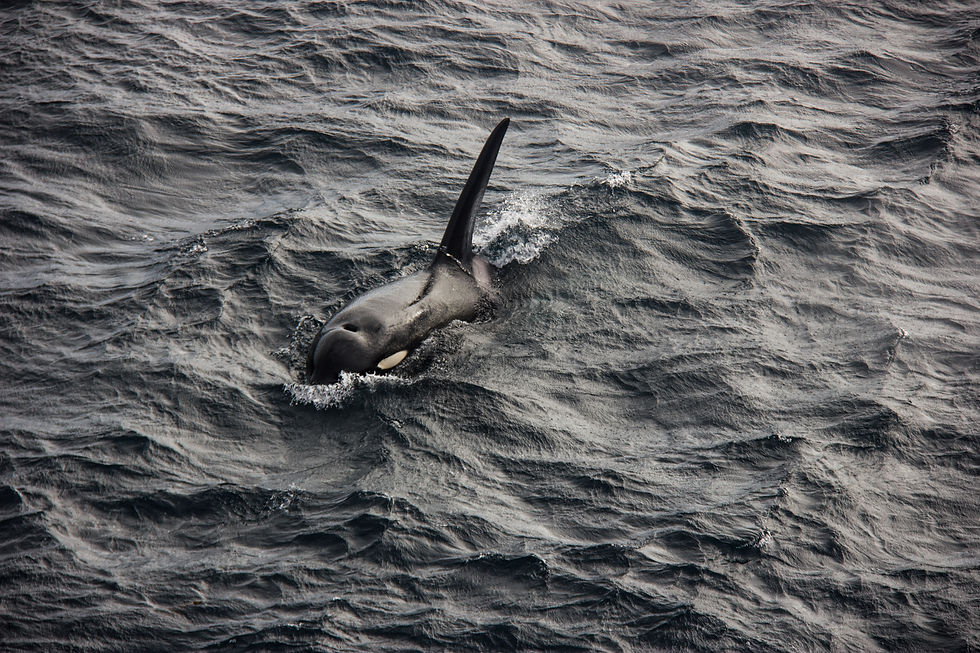
Imagine sailing through the most chaotic latitudes of Earth: the so-called Roaring 40s and furious 50’s, uncharted southern seas where your ship, the Marion Dufresne II, is the sole vessel carving a path through these distant waves. After 20 days, you reach a remote island where you’ll spend a whole year with 28 strangers, surrounded by albatrosses, subantarctic fur seals, southern elephant seals, orcas, and penguins. 29 humans. No one else. Living among the myths and tempests of the Southern Ocean, hearing only wind, waves, rain, and the cries of wild creatures or the eerie calm before the next storm.


Originally trained in the water and environmental sciences, I then specialised in the study of atmospheric pollutants and worked within European research infrastructures to measure and tackle greenhouse gas emissions. On the island, as atmospheric chemists, my teammate and I measured greenhouse gases and pollutants like mercury and microplastics in the air, rain, and sea. It felt like listening to the breath of the World: these territories play a crucial role in regulating the carbon cycle on a worldwide scale. Yet, with a crew of 29, it also felt like listening to humanity in its purest form through our harmony and conflicts. This experience highlights practical principles that relate to mental health, thought patterns, emotions, perception, and transformation. Having now specialised in cognitive neuroscience, I cast another look at these events and principles. Let’s briefly explore a few of them here.
Trauma and Storytelling: How Unmanaged Thoughts and Emotions Shape Us
Safety on this island is a matter of survival: we are more remote than the International Space Station, five days (by sea) from the nearest hospital 3000 kilometers away (against 48 hours for the Space Station). With no possibility of aerial rescue, our crew of 29 must be self-reliant. As a scientist, I volunteered for the medical team, never imagining that in the midst of winter, I would spend six hours assisting in surgery on a close friend following a head-first fall that resulted in a traumatic scalp avulsion.
On that day, I transitioned from scientist to surgical assistant, and ended the night as a bartender (yes, there is a bar) to numb the shock, as I was not used to such scenes.

Although he was convinced he wouldn’t live, our friend did. Yet, what unfolded over the following days was no longer only his story. It also belonged to us, the medical team, not because we took part in the medical intervention, but because we found ourselves drawn into its psychological aftermath. It revealed how easily we, too, can become caught in the stories our minds construct around trauma, until those stories begin to shape our own experience as much as the event itself.
The Polar Mental Syndrome
Among the many challenges of overwintering, the polar mental syndrome illustrates the toll of extreme isolation. After months of monotony and bad weather, the brain might undergo a neuro-behavioural drift, with different effects for everyone: cognitive impairment, irritability, or aggressivity. Ironically, the routine brought both balance and a sense of endless repetition, turning mundane things into sources of conflict: for three months, a dirty toaster became a source of tension.
Beyond maintaining a healthy relationship with oneself, group cohesion is the only way to stabilise the collective mind and ensure physical safety. Every year on these stations, compromised social dynamics and emotional mismanagement lead to serious incidents. For instance, in one notable event one previous year, a medical doctor, unable to cope, abandoned the station, found a hidden volcanic cave on the island, and lived there alone for several weeks with a basic food supply until the expected arrival of the logistics ship.

The Force of Habits and Routine
Every role is vital to the community: medical doctors, scientists, military personnel, cooks, infrastructure workers, and the station leader all contribute beyond their daily duties to cleaning, logistics, safety, and bartending.
While routine helps us navigate unsettling environments and lay down some healthy habits, it can also lull the mind to sleep, as it did to mine.
This cognitive autopilot can limit our perspective and extend beyond our daily tasks to our social lives. In isolated environments, familiar social dynamics can become remarkably persistent. Even in a group of 29 people, repeated patterns of interaction can rapidly crystallise into stable subgroups. Over time, if unnoticed, these habits can constrain social mixing and erode the sense of cohesion that is essential for long-duration missions.

Among many possible antidotes, one is metacognition: the ability to observe our own patterns. We can ensure our thoughts and actions are driven by intention rather than mere automatic reaction. By consistently monitoring our behaviour, we break and replace mindless habits with a deliberate, transformative way of being, until it becomes easier.
There, even consciously engaging differently with someone outside our usual circle can become challenging. I found that when such an effort led to a positive interaction (or that I chose to react positively to it), I could use it as a stepping stone for next time. What initially required conscious effort gradually became easier and more joyful. In this sense, metacognition was not simply a way of observing my own behaviour; it became a practical tool for changing it.
Perhaps this is where routine and metacognition meet. We can become skilled at noticing our established patterns, questioning them, and deliberately moving beyond them, until it becomes second nature. In doing so, we not only embrace change, but gradually outthink our old selves, elevating our thinking and feeling beyond the patterns we have grown accustomed to. Is there anything more inspiring?


Nature and Us
Surrounded by the pure wilderness, living amidst the relentless storms and fierce majesty of the subantarctic exposes a profound cognitive dissonance: we feel an instinctive love for this harsh beauty, yet the very data we work on (climate, biodiversity) confirms we are the architects of its current destruction.
Just as we can "break the habit of being ourselves" to transform the psychological challenge of isolation, we can apply that same (over)simplified principle of change to our relationship with our immediate environment. Yes: this transformation is a practical, poetic dare: the only one available.
Mastery of our internal state is essential for collective awareness. Yet it must not be framed in a pernicious way that places the burden solely on individuals- a strategy often used in the corporate world to deflect ethical responsibility. By rewiring our choices and inner landscapes, we move beyond inherited narratives and help force genuine systemic shifts in global politics. We rewrite what happiness and meaning can be.
We have explored some of the most extreme and isolated environments on Earth. Now we must prove we have the discipline to protect them, not just for their sake, but for our own, as our survival - being it just in terms of food supply, drinkable water and breathable air - relies entirely upon them.


