


Could Low Brain Iron Levels Help Explain Schizophrenia?

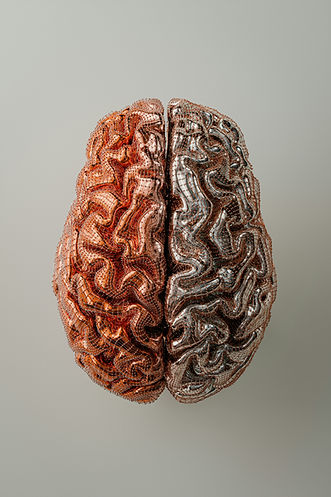
I have always wanted to understand how the brain works.
When I was 6, my grandfather had a serious stroke. This always witty, happy, active man became quiet, sad, and unable to move the left side of his body. He stopped eating to try to end his life several times but was kept alive with feeding tubes until he passed 5 years later.
Soon after, I came across the author Oliver Sacks. His books taught me that the brain doesn't just support who we are; it is who we are. Everything from how we move, to our behaviours, can be explained by brain processes. My grandfather's left-sided weakness was due to a blood clot stopping a blood vessel feeding the right side of his brain, but the mechanism underlying his personality change and depression was unknown. This is what inspired me to investigate the processes underlying mental illness.
I went to medical school with the intention of becoming a neurologist, but I was consistently drawn to the mental aspects of conditions. Although I enjoyed lectures on psychopathology, it was during my time on psychiatric wards that I really learned about the impact of mental illness. I underwent my psychiatry training at the South London and Maudsley and East London NHS Foundation Trusts, splitting my time between treating people with schizophrenia and using brain scans to investigate mechanisms underlying the disorder. I am honoured that this research, which I present below, was recently awarded the Alfred Meyer Prize from the Psychiatry Research Trust for work on the relationship between brain mechanisms and mental illness.
My passion drew me to researching schizophrenia, the mental illness that carries the greatest burden and whose symptoms are among the hardest to understand. People with schizophrenia often believe that others are trying to harm them or hear the voices of people who aren't there. As if that weren't hard enough, the condition also affects memory, motivation, and thinking. As a psychiatrist, I find it hard that our current treatments don't work well for many people with schizophrenia and often cause intolerable side effects. If we can understand the brain differences underlying the condition, we may be able to develop better treatments.
The living brain is difficult to study as samples cannot be taken to analyse whilst people are alive. Much of what was first learned about mental illness came from examining the brains of people once they die (postmortem). However, this cannot tell you what is happening when the person is unwell. Brain scanning has allowed exploration of brain mechanisms during mental illness. My colleagues and I used novel scanning techniques in the hope of discovering new factors that contribute to schizophrenia. Our findings suggest that low brain iron may underlie aspects of the illness. This sounds surprising at first, as we associate low iron with tiredness and anaemia, not hearing voices and losing touch with reality.
Why Iron Matters
Iron is a mineral found in red blood cells which allows them to carry oxygen around the body. Iron deficiency can lead to anaemia, which leaves people tired and weak. Iron is also essential for many brain functions. When brain iron levels are low, this can impair how brain cells fire and is linked to fatigue and memory problems.
Iron deficiency is the most common nutritional deficiency worldwide, affecting 1 billion people. Therefore, if low brain iron levels do contribute to schizophrenia, this could theoretically affect many people. However, the majority of people with an iron deficiency do not develop schizophrenia, pointing out that low iron alone is not a cause of the disease. It is more likely that low iron levels interact with other mechanisms to increase vulnerability to developing schizophrenia. Furthermore, iron supplements can effectively increase blood and brain iron levels, indicating that the abnormality may be remedied using existing treatments.
Findings from a study my colleagues and I published in Molecular Psychiatry in 2025 suggest that iron levels in the dopamine brain centres are lower in people with schizophrenia than in people without the condition. Dopamine is a chemical messenger in the brain which regulates aspects of response to rewards, motivation, attention, and mood. In schizophrenia, altered brain dopamine levels are linked to worse symptoms. For this reason, and because iron is needed for adequate dopamine function, low iron levels in dopamine brain centres may contribute to symptoms of schizophrenia.
What Earlier Studies Missed
Low brain iron levels in schizophrenia had never been robustly demonstrated before. The earliest attempts measured iron in brain tissue after death and found no consistent differences. This is probably because death alters brain iron levels, making it difficult to know what iron levels are during active illness.
My study instead used magnetic resonance imaging (MRI), which uses powerful magnets to produce detailed images of the living brain. Because iron is magnetic, MRI can be used to estimate the amount of iron present. Earlier studies using this approach had linked schizophrenia to both higher and lower brain iron levels. However, they hadn't accounted for materials that oppose iron’s magnetic field, such as myelin.
Untangling Iron From Myelin

Iron and myelin push the MRI signal in opposite directions, meaning that the scan reflects a balance between both measures. A gain of myelin can therefore look like a loss of iron, and a loss of myelin like a gain of iron. Not separating the two may explain why earlier studies contradicted one another. Myelin is the white fatty coating that insulates nerve fibres and speeds up signalling between brain cells. Its abundance is why nearly 50% of the brain, known as white matter, is white!
To resolve this issue in our study, we used two MRI techniques: one sensitive to iron and another sensitive to myelin. Our results indicate that both iron and myelin concentrations were lower in patients with schizophrenia.
Pinpointing the Cause of Our Findings
To help identify the underlying pathological process, we compared our map of iron loss with maps showing the distribution of cell types. The largest losses were concentrated in regions rich in oligodendrocytes. Intriguingly, these cells store large amounts of iron and produce myelin.
This could mean that when oligodendrocytes lack sufficient iron, they may be unable to form myelin properly. Our findings suggest that schizophrenia may involve a loss of both iron and myelin, tied together through the dysfunction of these cells.
Why This Matters
Our results suggest that patients with schizophrenia have low iron levels in the dopamine brain centres. Dopamine is a chemical that brain cells use to communicate with each other, and people with schizophrenia have been shown to have too much dopamine—a hallmark of the disorder. We recently showed in our 2025 paper, published in The American Journal of Psychiatry, that low iron levels in the dopamine centres were related to excess dopamine production in those with schizophrenia. Given the finding that increasing brain iron levels in rats decreases dopamine production, we hypothesise that increasing brain iron levels in people with schizophrenia may be a potential treatment mechanism.
There is a long way to go before any of this reaches the clinic. But the possibility that something as fundamental (and as fixable) as iron could play a part in schizophrenia is exactly the kind of answer that made me fall for this field in the first place.
Luke Vano is a recipient of the Psychiatry Research Trust’s Alfred Meyer Prize, which recognises outstanding research into the relationship between brain mechanisms and mental illness. If you would like to support the next generation of researchers working to advance our understanding of mental health, please consider supporting the Psychiatry Research Trust.


