


Finding Her Voice: The Science of Singing in Motherhood

Exploring how the simple, ancient act of singing can help mothers navigate their changing identities, build community, and hear themselves again
Before a baby can understand a single word, before they can even clearly focus on a face, they already know one sound better than any other: their mother’s voice, with research suggesting that infants learn to recognise this specific sound even before they are born. The maternal voice has a profound impact on the baby, playing a crucial role in their cognitive and emotional development, fostering secure attachment, and providing a sense of safety and comfort.
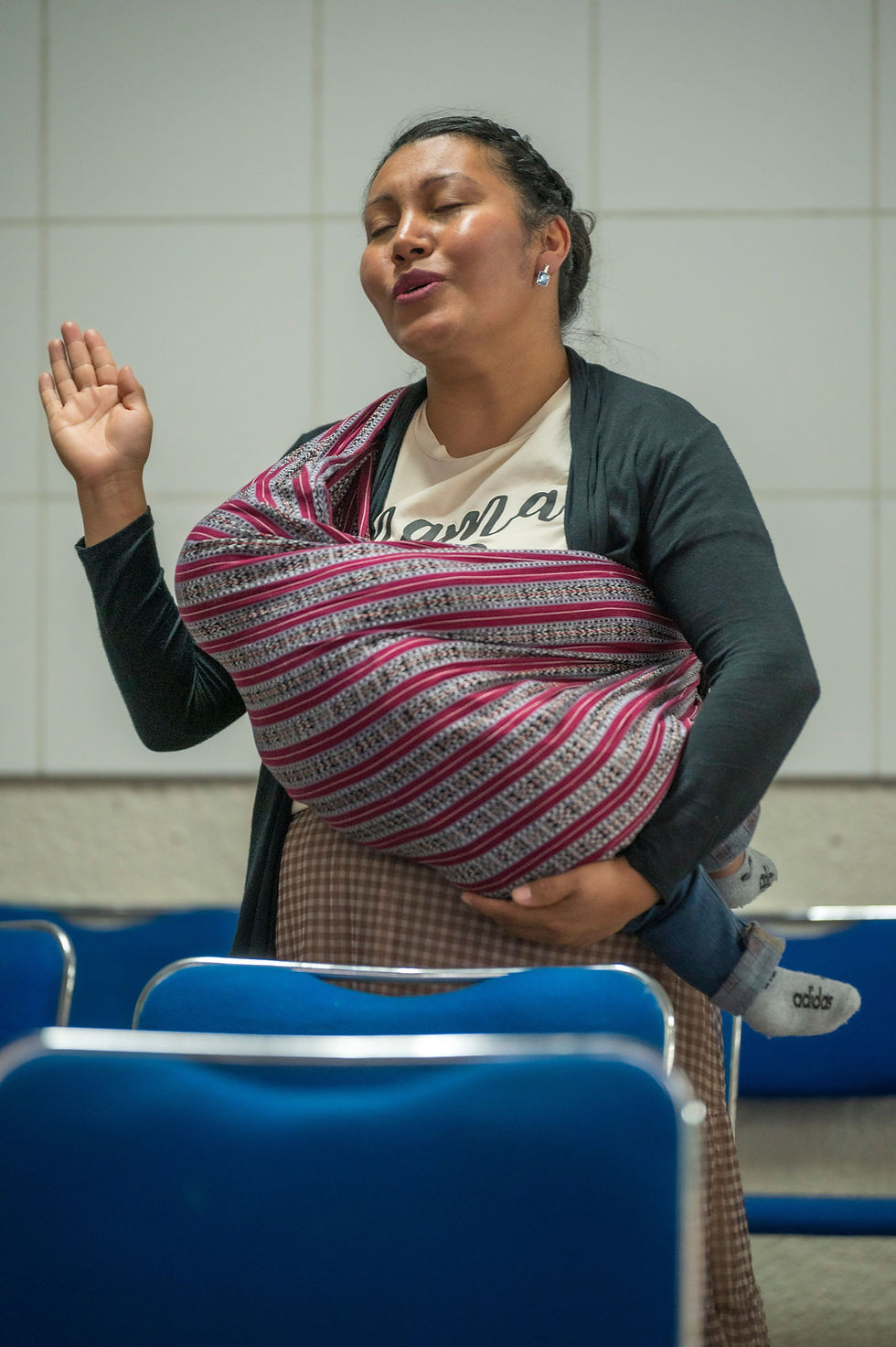
But this beautiful reality raises a vital question: if a mother’s voice is so important for her baby, who is looking after the mother’s voice? I am not referring only to the sound she makes, but to the woman behind it, her identity, well-being, confidence, and sense of self.
I am a professional singer, a performer, and a voice educator. I am also a researcher specialising in Singing for Health, and I have spent years observing how people use their voices to express themselves. My work combines artistic practice with scientific research because I believe empirical evidence and lived experience should inform one another.
Recently, I led a qualitative research project called Melodies of Motherhood, exploring how singing might support maternal well-being and the mother-infant relationship. Mothers participated in a series of inclusive online group singing workshops. Before the workshops, mothers completed an open-ended questionnaire about their beliefs in their ability to be successful in their role as mothers. After the workshops, I also conducted interviews to understand shifts in mothers' emotional well-being, self-confidence, and perceived connection with their infants. This project and my work in community settings became a lens for exploring broader questions about what it means to find, lose, and reclaim one’s voice during one of life’s most profound transitions.
Finding the "Me" in Motherhood
Becoming a mother is a life-changing experience, full of joy and love, but also marked by uncertainty and self-doubt. Many mothers feel isolated, face stigma, and lose a sense of control. One mother in my study said that after having a baby: "you can feel like you lose your identity and just become Mum". People ask about the baby, but often forget to ask about the mother.
Caring for another being is an enormous responsibility that may reduce a woman's daily routine to feeding, changing, and sleeping, leaving little space for herself. In this challenging period, it is not surprising that mothers’ emotional well-being may be affected. As one mother expressed, "If I am not me, how can I make him him?" Her mental health is absolutely crucial; without it, she cannot pour from an empty cup to nourish another human. So, what do we do?
More Than Just a Lullaby
To understand how we might better support women during this time, I designed singing workshops specifically tailored for mothers. Throughout history and across cultures, singing has been part of our lives, bringing people together, facilitating communication, and helping relieve stress.
Singing has also been suggested to support maternal mental health and wellbeing; in fact, research has shown that group singing can reduce symptoms of postnatal depression. Yet, the aim of Melodies of Motherhood was not to create a clinical intervention, but to offer a safe, inclusive space where mothers could sing together, express themselves, and support one another.
We did not utilise traditional nursery rhymes; we sang pop, soul, gospel, and folk songs. One mother mentioned that nursery rhymes can sometimes feel a bit "whiny," and that having the opportunity to sing songs she truly loved added a whole new dimension to her routine. The workshops provided a dedicated space for mothers to focus on breathing, warm up their bodies, and simply enjoy music.
Nurturing the Mother’s Voice Nurtures Her Identity
One of the most notable outcomes of the project was how singing served as a bridge back to the mothers' own identities. Singing helped these women carve out a space just for themselves.

One mother realised during the project that she missed her music deeply. Before having her baby, music was a huge part of her life, but the silence of early motherhood had taken over. After the workshops, she began putting on her own music in the kitchen while her baby ate, realising she was allowed to have her music too. Another mother spoke of dusting off her ukulele, an instrument that might have sat in a cupboard for another year if she hadn't been motivated to share her love of music with her child.
These moments are meaningful. By prioritising their own joy and self-expression, mothers are empowered to take charge of their emotional health. They stop treating singing as a tool to soothe the baby and start using it as a shared activity.
Finding Harmony Together
Singing also affects the relationship with the baby. The mother-infant bond heavily relies on the mother's emotional availability and confidence in her ability to care for her infant. In fact, if a mother is distressed, she may struggle to recognise and respond to her baby's needs. On the contrary, when a mother is relaxed, the connection improves. Reflecting on this shift, one participant shared: “I mean, definitely my confidence has improved with him… I feel like I understand him more and his needs and how to help him.”
During our project, mothers noticed that when they sang for pleasure rather than just trying to soothe a crying infant, and the baby was in a good mood, the child responded beautifully. One mother noted: "Choosing my moments when I'm singing to him, perhaps not to soothe him, I don't think it works, but when he's in a good spot, as part of our enjoyment, our playtime together, yeah, it's clearly something that he likes."

Singing for pleasure and making up songs together became a communication vehicle. Mothers reported that their babies began to babble more, make eye contact, and smile as they watched their mothers' mouths move to familiar tunes, creating a one-on-one interaction that supported emotional synchrony.
The Power of the Collective
Engaging in these online workshops also helped reduce feelings of isolation during the postpartum period. Even from their own living rooms, mothers were touching base with others navigating this beautifully chaotic season of life.
When they sang together, it became a shared experience, a collective exhale. As one mother reflected on the physical relief of these sessions: "You're so consumed with sort of surviving this person... but actually, it does make you feel better to do some quite small things that just make you feel more connected to your own body".
You do not need to be a "good" singer. Sometimes, the baby is not in the mood, or a mother feels she cannot "perform". These moments served as a reminder that motherhood is not a performance to be judged, but a continuous journey of learning and adapting.
Hearing Themselves Again
Throughout my research process, I found a quote that truly inspired me and my project: “You only get to be one mother in this world.” We only have one chance to be a mother and care for our children, and we deserve to live motherhood as healthily and happily as possible.
Perhaps singing will not erase the fatigue of sleepless nights, nor is it a substitute for professional mental health support, but it is a powerful and accessible tool that can effectively support the transition to motherhood.
Having a baby does not mean a woman must lose herself; rather, motherhood should be considered an enrichment of her identity. By giving mothers space to sing and freely express themselves, we support their need for creativity, joy, and community. We remind them that they are still the protagonists of their own lives and that they have the right to put themselves first.
Perhaps singing does not simply help mothers care for their babies. Perhaps it helps mothers hear their inner voice again.


