Impossibly Far, Incredibly Close: Lee Chang-dong's Possible Love

Is the moon there when nobody looks? — N. David Mermin, physicist (1985)
On 12 September, South Korean director Lee Chang-dong's first feature in eight years won the Grand Jury Prize at the 83rd Venice International Film Festival. No Korean film had won it before. Eleven days later, it arrived in a handful of Korean cinemas for a limited run before its Netflix release. For an award of that weight, the release was modest, and the title just as understated.
Possible Love.
Even in Korean, the title sits awkwardly on the tongue, like something that doesn't quite belong there. By going out of its way to say love is possible, it calls up a long history of storytelling, all those countless tales of impossible love. Those stories rested on a quiet optimism: even when love failed in fiction, we could still believe it would somehow survive in life. The air has changed. A title that has to insist love is possible hints at a deep anxiety underneath, the fear that it no longer is.
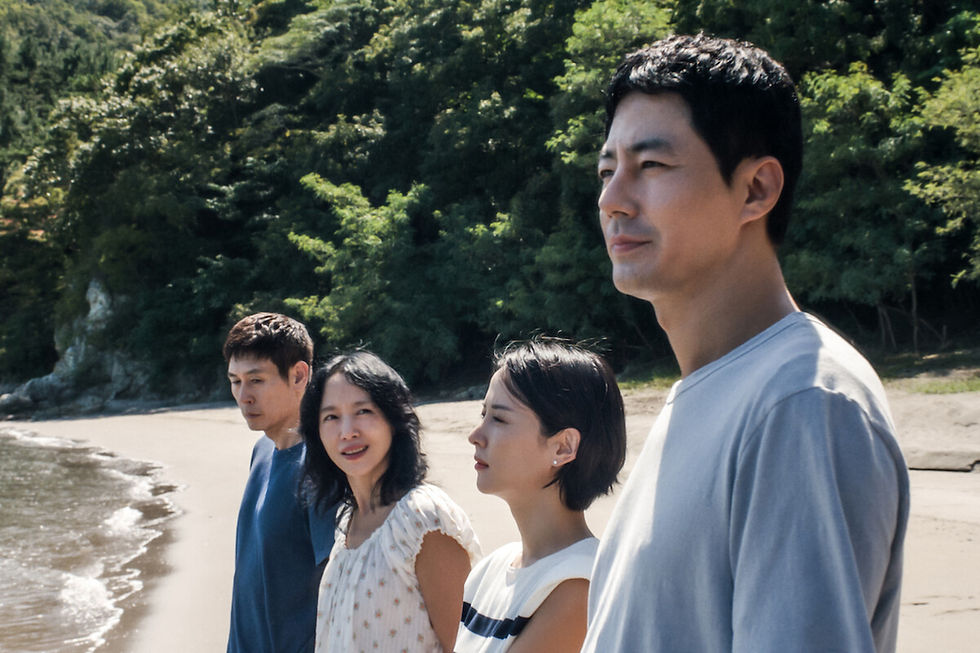
The film opened in UK cinemas on 23 October and arrives on Netflix on 6 November. It follows two married couples living opposite lives. Mi-ok (played by Jeon Do-yeon) and Ho-seok (Sul Kyung-gu) have been together since their teens. Ho-seok, a welder, lost his job in mass layoffs and still carries, in drink and in silence, the wounds of the strike that was violently suppressed. Mi-ok, warm and bright, keeps the family going through factory work.
Ye-ji (Cho Yeo-jeong, best known for her role in Parasite), a filmmaker from a comfortable family, is making a documentary about the laid-off workers but still needs someone to put at its heart. Then she meets Mi-ok. Soon the two couples are sharing drinks and attending parties, Ye-ji's camera never far away, while Mi-ok finds herself drawn to Ye-ji's wealthy, easy-going husband, Sang-woo (Zo In-sung), who has never known hardship. As the two worlds draw closer, the cracks in each begin to show.
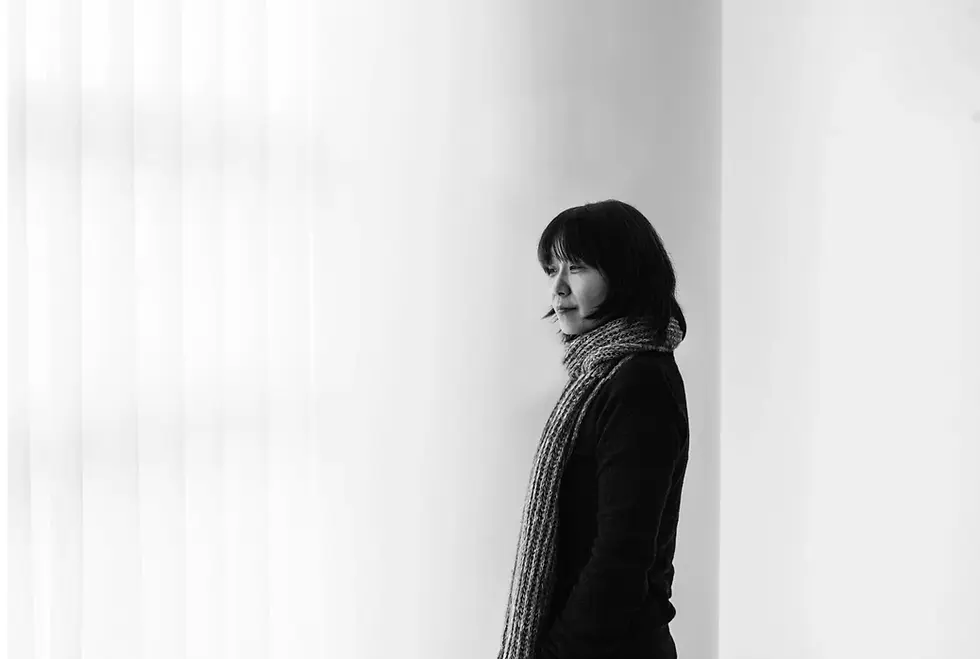
Despite the title, this is not a romance. Lee calls it a story about the love that holds people together through hard times. A novelist turned director, he is best known internationally for Burning (2018). "I made this film," he said, "to ask what cinema can do, and what it must do, at a time when the bonds between people are breaking down."
As a writer, I've long been drawn to Lee's way of telling stories, particularly his attention to lives we might otherwise overlook. Possible Love made me wonder whether cinema can help us see one another, however different our lives may be.
This isn't a review. It's a preface: the kind you'd find at the start of a book, but that a film has no room for.

Outside the Film: An Impossible Love for a Possible Cinema
In 2022, Lee made a 28-minute short, Heartbeat. The camera stays close on eight-year-old Chul. Seized by a fear he can't explain, he slips out of class and runs from school. The shaking camera alone tells us, painfully, what world this child is growing up in. His father, a laid-off worker, is protesting on top of a crane, and his mother has depression. As we realise he is running home, afraid his mother might take her own life, we cheer him on and slowly remember what it feels like to be lost in a film, breathing along with the screen.
Streaming has changed how we watch, and loving the cinema has begun to look like an impossible love. Lee loves it anyway. For him, its heart lies in “living through the time that the characters live through, together with them.”
Cinema shares a moment. Once a film starts, it doesn't stop, and we give ourselves completely to the dark room. At home, we become viewers who can slip away at any moment, and films become “content.” For 28 minutes, Heartbeat brought back the forgotten experience of being an audience. But when it ended, the world that had put the father on a crane and driven the mother into depression was unchanged.
What must cinema do in times like these?
Four years later, that question deepened into the 164 minutes of Possible Love.
Into the Film: The Camera and the Ethics of Telling Others' Stories
Possible Love began as a script Lee wrote and erased for more than a decade. In 2009, mass layoffs and a police crackdown at the car maker SsangYong Motor left a deep scar in modern Korean history. Lee began writing about a laid-off worker and his wife, but the more he wrote, the more his doubt grew. For them, pain was everyday life, and he was only watching from outside. Honest documentaries already existed. Why make another film about their suffering?
In 2024, Oh Jung-mi, his co-writer on Burning, suggested adding a second couple: Ye-ji and Sang-woo. In Ye-ji, Lee found a way to bring his own position as an outsider observing through a camera into the story itself.
“How close am I, really, to these people?”
The doubt that had held Lee back for over a decade became the thing that drives his characters. The story grew beyond labour into one that asks what we owe the people whose lives we put on screen.
We crave other people's lives, and it shows whenever we reach for a camera. We rarely film our ordinary days, more often moments that feel once-in-a-lifetime. So what we choose to film quietly confesses what is not our everyday life. The comfortable turn their cameras on hardship. Those who struggle turn theirs on comfort. Each choice reveals where we come from and where we stand.
Possible Love shows this with painful honesty. Ye-ji points her lens at Ho-seok and Mi-ok's suffering. Mi-ok, longing for Ye-ji and Sang-woo's wealth, takes out her phone. In both their gazes, there is guilt.
That is not my life.
For one, the thought brings relief. For the other, resignation.
So what should we film now? Perhaps the better question is what we choose not to film, and when to hold back.

Inside the Film, Looking Out: A Possible Love for the Things We Can't See
A bright moon rises over the sea; though we are at opposite ends of the world, we share this moment. — Zhang Jiuling, 8th-century Chinese poet
Film, Lee once said, can make us forget what we cannot see, or make us think about it more. He believes it should do the second, and his own films do. They work like an engraving, where the image is formed by the lines the blade cuts away, revealing life’s darkest corners through what they leave out.
Today, the sense of being together, of a shared public life, has grown faint. We retreat into private worlds, building little castles around our own tastes and experiences, closed off from others even as we put our lives on display. Cameras are everywhere, but being seen is not the same as being connected.
Amid all this, what does Possible Love do? It keeps returning to the moon. I won't spoil where it appears. I'll only recall what the moon has long meant.
In Korea, as in so many places, the moon stands for a love that belongs to all of us and endures. However much we try to make a spectacle of it, its soft glow remains unchanged. It is a symbol of everything that was always there, that we forgot, and so lost. The moon is so ordinary we forget it hangs over our heads at all. Then, every so often, we notice it again, and it looks almost new.
What if it is this ordinary thing that keeps us going? What if it drew us out of our castles and back outside together, so that under a quiet night sky we all tipped our heads back the same way, our eyes meeting in one place?
Twelve centuries ago, a poet looked at the moon and knew that someone far away was looking at it too. Impossibly far, and incredibly close.
And perhaps, when you leave the cinema, you’ll find yourself looking up.