The Politics of the “Perfect Victim”

Updated: Jul 27
Why some survivors must work harder to be believed
I am a writer exploring Black identity, society, and culture through personal reflections and social commentary. My writing draws from my experiences as a Black woman, examining the emotional and political realities that shape how we move through the world. This piece comes from thinking about the complicated ways society responds to pain, vulnerability, and survival, particularly when that suffering does not appear in ways people expect or feel comfortable with.
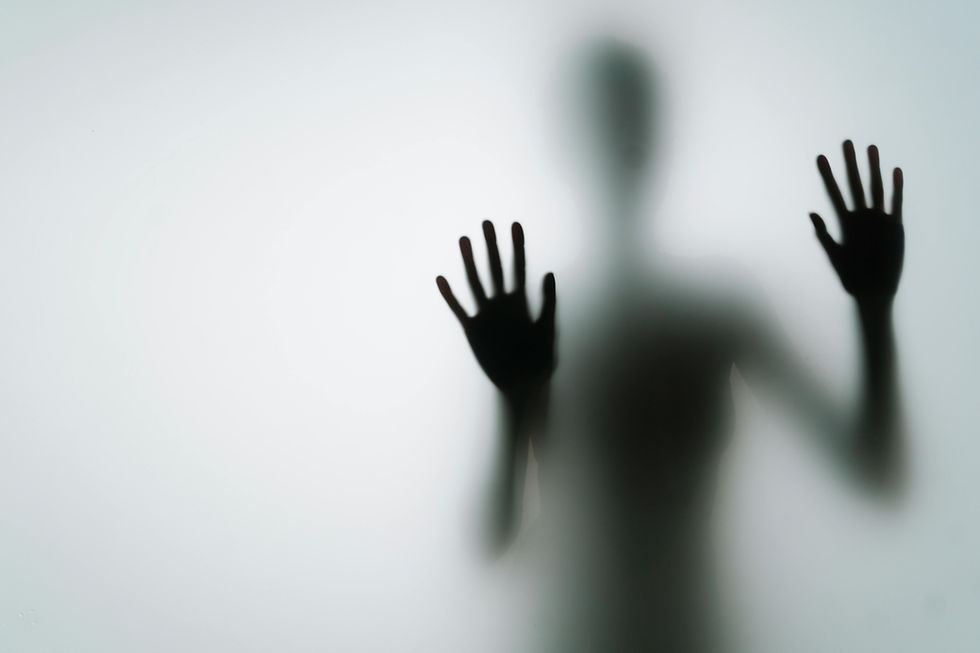
The Unwritten Rules of Victimhood
Many of us would like to think that we always believe the survivors first. That we sympathise with them. But often, what we really believe in is the idea of the “perfect victim.”
Victimhood, at least publicly, sometimes comes with unwritten rules. There are expectations people place upon survivors, things they expect to see that qualify someone as believable.
You are expected to be visibly hurt, emotionally open, and undeniably vulnerable.
Your pain has to look recognisable, but also palatable. People have to be able to see your suffering without being made too uncomfortable by it. You should cry, but not too much or else you are “dragging it out.” Speak up, but not too loudly. Be angry, but not in a way that unsettles people. You must above all be strong. Strong enough to survive what happened to you but fragile enough to still be perceived as harmed.
This is what creates the “perfect victim.”
The moment someone steps outside of these expectations or fails to prove their ‘victim status’, sympathy can begin to disappear.
Performing Pain for Public Consumption
I have been thinking a lot recently about the subtle ways society expects people to show their suffering in order to be taken seriously, as though pain doesn’t exist if it doesn’t fit within the parameters of strangers' expectations. It’s not just whether harm occurred, but whether the victim behaves in a way which society recognises as victimhood.
The “ideal victim” is passive, soft-spoken, and morally uncomplicated, avoiding anything that could make their trauma look less 'believable'. They must not lash out, but also not look too happy. They can’t carry on with life too quickly or analyse their trauma with too much clarity because who would believe them then?
Suffering, to the public, is expected to be aesthetically recognisable. Unfortunately, real trauma rarely behaves so neatly, contrary to popular public belief.
People respond to harm differently, because people are different.
Some respond with anger. Some become detached or hyper-independent. Some joke about their experiences because humour is easier than vulnerability. Some appear “fine” because continuing to function is a survival mechanism. Survival does not always leave room for collapse.
People often confuse composure with the absence of pain.

Social Media and the Performance of Suffering
This becomes especially visible online, where victimhood increasingly feels public and performative. Social media has created a culture where people narrate their pain in real time, sometimes before they themselves have even processed it. Audiences then decide whose suffering feels authentic or deserving of support and the internet rewards visible vulnerability, but only when it remains digestible.
There is often an unspoken expectation that “real” suffering should completely incapacitate someone. If a person appears too composed, too functional, or too articulate, people begin to question whether they were truly harmed at all.
This is part of what makes public conversations around harm so uncomfortable. People do not simply want victims to suffer, they want them to suffer correctly.

Who Gets to Be Seen as a Victim?
The politics of who gets recognised as a victim has never been equal.
Black women in particular are often denied the softness society typically associates with victimhood. There is a long-standing cultural expectation that Black women should be resilient, emotionally self-sufficient, and most importantly strong.
Researchers have described this as the “Strong Black Woman” or “Superwoman” schema, a social expectation that Black women must suppress vulnerability, endure hardship quietly, and continue functioning regardless of the emotional cost. Studies have found that this pressure to appear strong is linked to emotional distress, depression, and reduced emotional support because vulnerability itself can begin to feel unsafe or socially unacceptable.
Additional work on the Superwoman schema explores how many Black women internalise an obligation to remain strong, resist dependence, and care for others whilst hiding their own suffering. What is often framed culturally as resilience can become emotionally isolating when strength is treated not as a choice, but as a requirement.
This expectation also shapes how Black women are perceived publicly. Vulnerability is often denied to Black women because society has already decided they are built to withstand more pain. Anger is interpreted as aggression. Emotional detachment is mistaken for hardness. Composure is read as proof that no real harm occurred.
Writer Marverine Cole argued that the “strong Black woman” trope harms mental health precisely because it encourages society to see Black women as endlessly resilient whilst overlooking the damage caused by that endurance.
That strength can become a prison when people use it to deny vulnerability. As a Black woman myself, I can attest to this. We are expected to survive our pain, overcome our trauma with ease and haste, and not let it consume us before we are even allowed to acknowledge it.
This creates a strange contradiction where Black women are expected to carry extraordinary emotional weight whilst receiving less empathy for the damage it causes because, supposedly, we can “handle it.”
The Myth of the “Perfect Victim”
The truth is that the “perfect victim” does not really exist. Human beings are too emotionally complicated for that and yet society continues to reward people who perform victimhood in ways deemed acceptable whilst punishing those who do not.
Victimhood is deeply social and political because of how it shapes whose pain is recognised publicly and whose suffering gets minimised or rationalised away.
Empathy is not distributed equally. Some people have to work much harder to prove they deserve compassion and often the burden of proof is behavioural.
Victimhood becomes less about what happened and more about how convincingly someone performs the aftermath.
So many survivors are exhausted by the pressure to twist and contort their pain into something emotionally understandable for other people. But survival does not always look inspiring. Sometimes it is defensive. Sometimes it looks like carrying on because life gives you no other option.
Maybe the problem is not that people fail to understand suffering, but that they only recognise it when it arrives in familiar forms.
The “perfect victim” has always been less about innocence and more about palatability. Unfortunately, pain is rarely neat or socially convenient and why should it have to be?
Real people do not always respond to harm in ways that make others feel comfortable.
Perhaps empathy should make room for that too.
This article has been sponsored by the Psychiatry Research Trust, who are dedicated to supporting young scientists in their groundbreaking research efforts within the field of mental health. If you wish to support their work, please consider donating.