


All That I Lost to Rugby

On a spring day in 2023, I was subbed on at half-time in a rugby game between my university team and the British Army. Two minutes into the second half, I clashed heads with a teammate and briefly lost consciousness. When I came to, I realised something felt very wrong. My first thought was about the exams I had in two months. In the end, the exams went smoothly, and I returned to rugby within 2 months. However, I didn’t realise that this ‘routine’ concussion would fundamentally change my life in so many ways. My name is Tony Cowen. I started playing rugby when I was 10. I played all throughout school and university, where I studied psychology. I hope that any rugby players reading this article are encouraged to put their cognitive health first.
Though I had been concussed before, this incident was far more severe and impactful. I had difficulty recalling anything from memory, struggled to carry a conversation, and was perpetually tired. After a week or two, I felt some symptoms abate. However, the tiredness didn’t go away. It was surprisingly difficult to articulate how this tiredness really felt.
It didn’t feel like I had done loads of exercise, or that I had slept three hours the night before. It was as if thinking now took twice the time that it used to. I found myself having to concentrate very hard to understand a paragraph of text, or struggling to commit phone numbers, names, and the like to memory. At university, I loved keeping myself as busy as possible. In the months that followed this latest concussion, I realised that I simply couldn’t keep up with myself anymore because day-to-day tasks that I had previously never had difficulty with became noticeably more challenging. I’d accidentally miss appointments and lose track of my deadlines. Though these symptoms improved, I never felt like my cognitive function returned to its prior baseline.
This was a very sobering feeling for my 21-year-old self. A few years earlier, I had broken a finger playing rugby. The knuckle on my right ring finger is still misshapen, and I can’t make a fist with my right hand due to the reduced range of motion. My anatomy was permanently altered. I didn’t particularly care about my fist-making abilities, so I never gave it much thought. This concussion was another matter entirely.
Society is increasingly aware of how much we rely on our physical function, but my experience made me appreciate just how dependent we are on our cognitive function. To give a contrived example, it would be much easier to find a job if I were to be unable to walk than if I had anterograde amnesia. At 21, I found myself contemplating the possibility that a single concussion had perceptibly and permanently reduced my cognitive function, and with that my chance at success in so many areas of life.
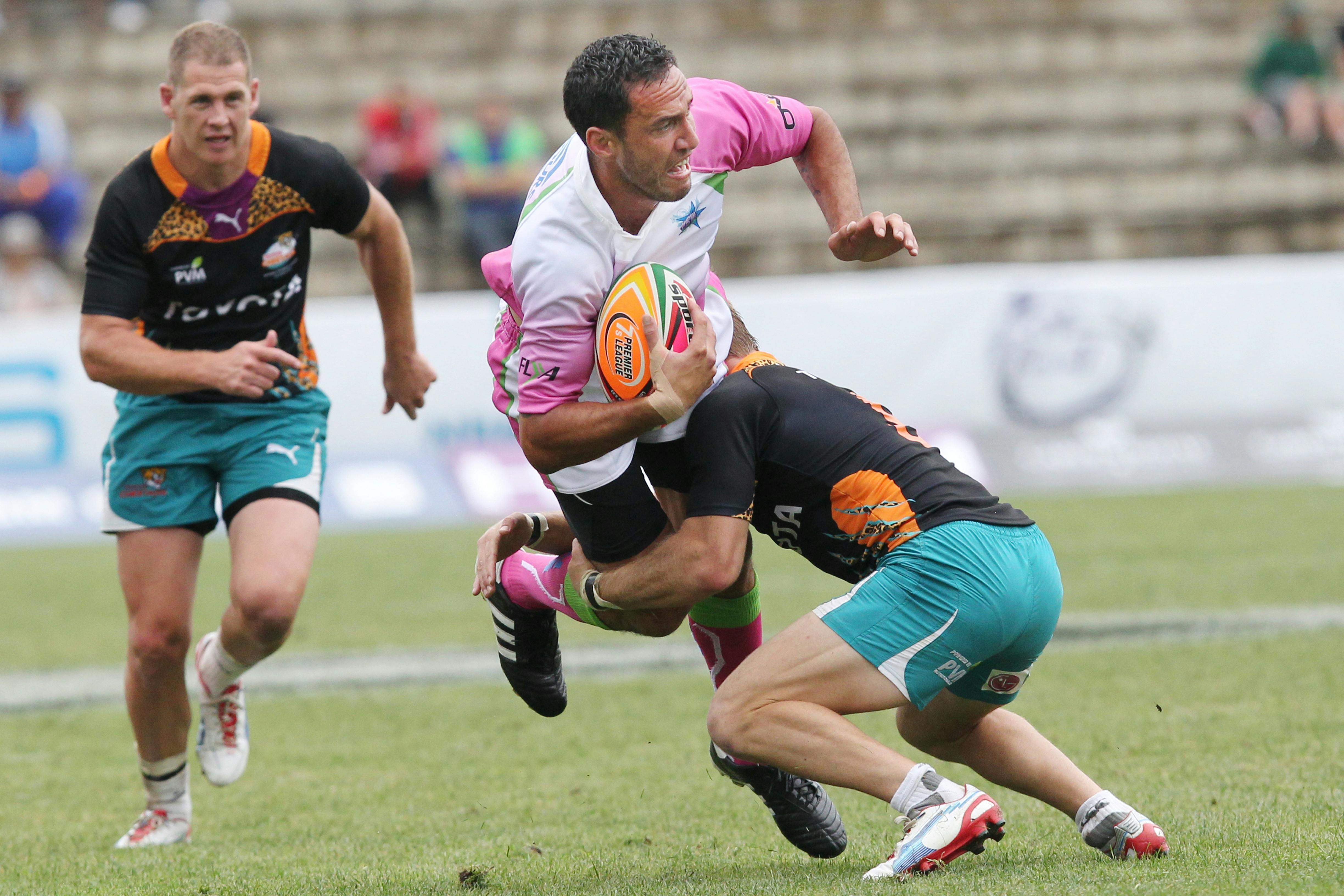
Rugby is often praised as being a sport for all body types, and I don’t disagree. Cheslin Kolbe, South Africa’s World Cup winner, stands at 5’7” and weighs 75 kg. His teammate, Frans Malherbe, is 141kg and 6’3”. At every level of the game, having different body types, and the abilities they afford, is an essential asset to the team. So much of rugby is centred on manufacturing and exploiting mismatches. A gazelle-like winger can use speed and agility to run around someone twice his weight, while a larger opponent can use size and power to run ‘through’ the winger. I weighed 70 kg at university and possessed nowhere near Kolbe’s freak athleticism. I knew that opposing teams would try to exploit me by forcing one-on-one tackles against someone 20 to 30 kg heavier than me. I was obsessive about making my tackle technique as good as it could be because, as a lighter player, the consequences of bad technique would be severe. The picture below illustrates bad technique in a tackle. The defender ought to have put his head on the other side of the attacker’s body, as in the image above. In the case below, he’ll experience a lot of the attacker’s momentum through his neck and head. Head placement is complicated by the attacker as they zig-zag, sidestep, and extend one arm to try to evade a tackle, which also in turn lowers their head position, making them vulnerable to head impacts from the defender’s head or shoulder.

As I returned to rugby, a cycle developed. I would experience a fairly minor head impact, which would trigger intense anxiety, making it difficult to enjoy the game. I would feel disappointed in myself that I allowed myself to experience a head impact, both through my actions in the moment and the fact that I was playing rugby at all. When I went home, I’d obsess over every symptom, trying to determine if my fatigue and dullness were due to concussion, exercise, lack of sleep, or if this was simply my new normal after the injury in 2023.
On and on this went. By the time I stopped playing rugby at the end of 2024, I had lost all confidence in my ability to tackle safely. I still enjoyed playing rugby, but that enjoyment was overshadowed by worry, which was inevitably followed by guilt. Given how I felt about the importance of cognitive function, I really struggled with the enjoyment of playing rugby pitted against the possibility of damaging my long-term health and career prospects. My feelings after playing rugby began to resemble how I’d felt after getting an alcohol-fuelled night out horribly wrong: waking up the next day with the mother of hangovers and my bank account in an even worse condition than me.
Perhaps the most frustrating aspect of the perpetual dullness was how it impacted my relationships. Prior to the concussions at university, I was no motormouth, but I often enjoyed the ‘buzz’ of conversation at social gatherings and never struggled for ways to keep a conversation going. I’m now often keenly aware of the silence as I grope for an interesting reply to a friend. As a result, I’ve developed a sense of trepidation about seeing friends, especially when I was feeling tired as I knew, of course, that I was likely to perform better after being well-rested. From being an escape from stress, socialising turned into another form of stress. When I visited close family, they would comment that I seemed tired and was quieter than usual.
Some of the longer-term symptoms have started to improve, many months after my last match. I know that I made the right decision to stop playing, but it’s a poor recompense for losing something which had given me joy since I was a young child.
This article has been sponsored by the Psychiatry Research Trust, who are dedicated to supporting young scientists in their groundbreaking research efforts within the field of mental health. If you wish to support their work, please consider donating.


