Idling High: Anxiety, Obsession, and Persistence
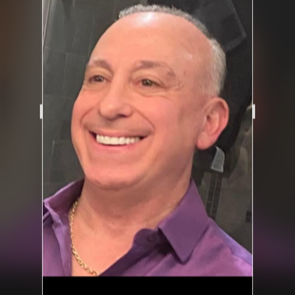
This is how I think about myself today: I’m a retired 63-year-old man, happily married, in excellent health, very comfortable. And yet, I idle high. I just accept that this is part of my makeup. I have brown eyes; I’m 5’- 9”; I weigh 170 pounds. I idle high.
Idling high is not a clinical term and it won’t be found in any psychology context of which I am aware. It is just the way I have come to identify with certain characteristics of my life. When I was 17, my very first car—a ’71 Mustang Mach 1—idled high. Waiting at a red light, it was loud and it would rattle and shake. The car was off in a way. It was impatient, like a racehorse, pining for the track. I learned to adjust its pep by fiddling with the carburettor.
Push-ups
I was a demanding, wilful, inflexible, worrisome child. Sometimes I had temper-tantrum-level anger. When I was 11, a friend asked to see how many push-ups I could do, and that lit a fuse. I felt dared, challenged, somehow coerced, and I began doing rigorous sets of push-ups twice a day, and under very stringent and byzantine self-imposed rules. (The push-ups had to be strict, military push-ups; my nose needed to touch the floor to count. They had to be done in very specific set time frames. I was not allowed to skip a set. Ever.)
I’d fight with myself because I didn’t want to do them. Sometimes I’d procrastinate, and I’d pace, debating aloud if I could allow myself the liberty to skip. Just this once. But I never did. I never missed. It was fruitless to oppose the compulsion; resistance was futile. And completing the set was always so stress-relieving.
Within nine months I was doing two sets a day of 500 consecutive push-ups, without stopping: a thousand a day. Every day.

Once during this time, I got sick with a high fever. Still, I forced myself to attempt to finish, but physically I just could not. I collapsed in tears. A meltdown followed.
Another time, my nose started bleeding and I refused to quit, my nose literally going up and down with the rest of me and dunking into the blood puddle collecting on the hard tile floor, drip by drip by drip. It was after that episode that my parents became concerned.

But this was the mid-1970s, and in our Queens (NYC), middle-class upbringing, the closest we came to real mental health awareness was laughing at the portrayal of a psychiatrist on a Hollywood sitcom talking in an Austrian accent and holding a pendulum-like timepiece in an effort to hypnotise a patient. All for laughs.
Self-Diagnosis
So, I went undiagnosed. My entire life since has been a collection of gruelling goals and the pain—and reward—of meeting those goals, or figuratively, almost dying while trying to. I've suffered symptomology from what I self-diagnosed as free-floating anxiety, panic attacks, OCD (Obsessive Compulsive Disorder), and a mania of sorts. I’m rarely depressed.
I have come to harbour ambivalent feelings about this way of being. I acknowledge both the great benefits and the terrible ordeal of being this way. I tolerate pain but celebrate achievement. And I don’t want anybody tinkering with my carburettor and my oxygen/petro mixture. (Of course, that hadn’t stopped me, years ago, from pursuing psychotherapy and relying on prescribed pharmacological agents which felt then as if they were life-saving.)
Extreme Behaviour
The push-ups were the first real example of extreme behaviour but so many more were to follow, and affecting every facet of my life: academics, career, fitness, finances, hobbies, relationships. This behaviour was extreme, or intense, but never unhinged. It was always goal-oriented and never maladaptive. In school, I pulled all-nighters, and had to get all As. I aggregated dozens of lists of the best novels and read them all, easily over a thousand, and some with accompanying annotation notes longer than the original texts. (Think Finnegans Wake).

For a dozen years now, I’ve run on a treadmill—nothing extreme about that—but in an effort to be more efficient, and recognising that though my body was taxed, my mind wasn’t, I began using the time to memorise lists of information.
Today I recite by rote different lists of information which I had long ago crammed into my head: all world capitals, U.S. Presidents, English monarchs, books of the Bible, the phonetic alphabet, articles and amendments to the U.S. Constitution (amendment number, year of passage, description), and the periodic table (element, atomic number, symbol).
I run through these lists literally backwards and forwards during my regularly scheduled five-mile runs which I do religiously. Every aspect of my life seems governed by ritual and compulsion, a succession of almost arbitrary goals and pain in meeting them. It’s both exhausting and rewarding.

I’ve been extremely fortunate, more than my share has fallen my way, and I want for nothing. I acknowledge that. But it’s not easy always being on. The drive is relentless. I feel that the pull of all of these goals is sometimes too great a burden. It has taken a Herculean task just to live up to my own expectations. Sometimes I think that I wasn’t built sturdy enough for this, that I’m too brittle for this type of life. Too fragile.
Ruminations on Why I am the Way I am
I have looked deeper. Why am I this way? Is it my place in the birth order? I am fourth out of five kids. Did I feel neglected? Maybe that’s part of it. I do think there is a strong feeling of inadequacy underlying all of this, but I also think that is pretty ubiquitous. Don’t we all often feel that way? Maybe it was the nuns. I did go to Catholic grammar school, and I do possess what I call Catholic guilt, but surely, this is mostly metaphorical.
Today, of course, in the decades after Freudian takes on life and literature have fallen out of vogue, it is less about psychology and more about biochemistry—both for diagnosis and for treatment. I have often thought that the early experience with the push-ups became both a result and a cause of this underlying compulsion. I theorise that the tremendous physical exertion expended at such a young age (and later, throughout my life as I catered to other extreme physical compulsions) biochemically reinforced a latent predisposition and made it stronger. Maybe I got stuck in a vicious cycle.
Coda
This is my life at 63. I am committed to keep going, and idling, and running as I always have, until the lights go out, the end comes, and both pain and sense of achievement in goals chosen are stopped by decree, for me, forevermore.

This article has been sponsored by the Psychiatry Research Trust, who are dedicated to supporting young scientists in their groundbreaking research efforts within the field of mental health. If you wish to support their work, please consider donating.