


Last Night a DJ Saved My Life

How club culture shapes our mental health
The Beginning of Modern Club Culture
I met Mark Moore while desperately looking for a flat in London. We immediately connected over our passion for electronic music and the club scene. As S’Express’s lead DJ, Mark is a living piece of that culture. Our friendship has motivated me, as a psychiatry trainee, to investigate the mental health impact of clubbing – one of my favourite off-work activities.
In the late 1980s, the Second Summer of Love saw British youth flocking to parties, dancing to the rhythm of acid house. The Second Summer of Love was a social movement which accompanied the rise of acid house music in the UK. Mark described it to me as a flourishing moment for club culture: “We imported house music from Detroit and Chicago, added our touch, and spread it across Europe”. Listening to him, I imagine colourful people partying shoulder-to-shoulder in a scorching heatwave.
In the opinion of many, the 1987 movement was fueled by the circulation of new drugs. “Ecstasy definitely played a big part in it”, Mark goes on. “People wanted to break free from the boundaries of an individualist society. Drugs, and music, were a way to feel liberated”. Pills would allow them to dance to 120 beats-per-minute until 9am, while boosting their sense of connection to others. This is where the modern club culture was born: electronic music, long-lasting parties, and drugs.

The Cons of Clubbing
These days, illicit substances are still a prominent component of the clubbing experience. 60% of UK ravers report taking drugs during their night out, and 40% of them consume before even going out. But modern substance use is not limited to MDMA; cocaine and synthetics have been widespread in clubs since the early 2000s, and mixing products is very common.
“Some people started consuming regularly”, Mark tells me, “With time, the negative effects of repeatedly taking ecstasy started to become clearer: when the hype of the ‘80s and early ‘90s was over, some friends struggled with mental health issues”.
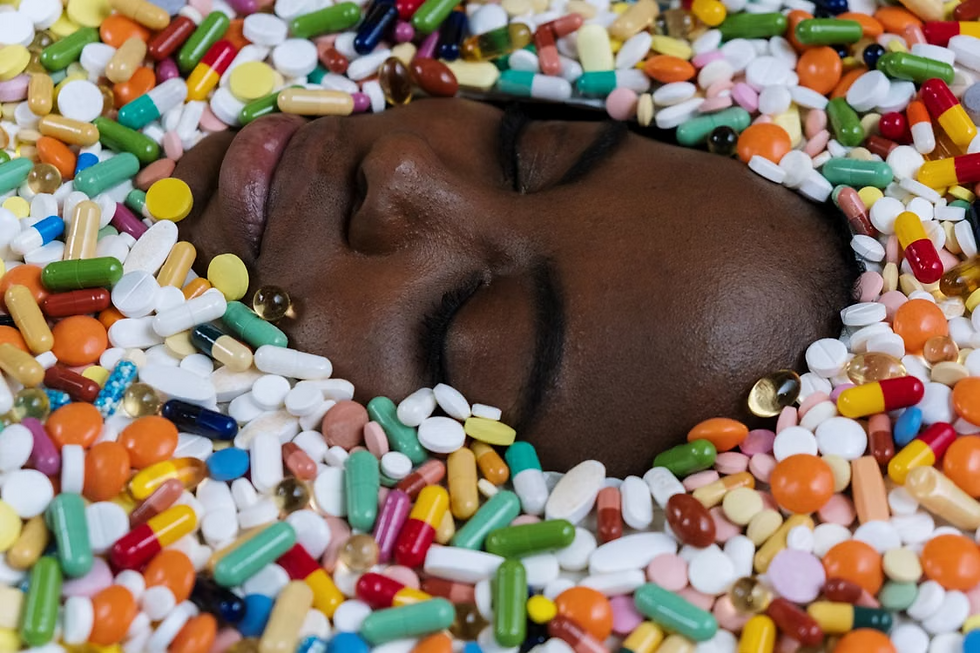
Taking psychoactive substances can lead to the infamous comedown, a mixture of unpleasant feelings due to the brain trying to make up for the chemical deregulation caused by drugs. Severe sadness and anxiety can last for up to three days after ecstasy consumption, while persistent difficulty concentrating and drowsiness can arise after taking ketamine. Over time, consuming illicit drugs may lead to addiction, and increases the risk of other physical and mental health conditions such as depression, psychosis, or anxiety.
Beyond drug use, sleeplessness is another potential harm of raving. If you also like partying, you might have experienced the feeling of coming home from the club exhausted but being unable to shut off your brain.
There are multiple scientific explanations for this. Flashing lights and loud sounds keep the brain in a state of alert, making it more difficult to wind down even after the music has stopped. Alcohol consumption, which commonly goes hand-in-hand with partying, can also be deleterious: it disrupts deep sleep, making you feel tired despite a full-night’s sleep. On top of this, late-night partying contributes to deregulating the circadian rhythm (our “biological clock”), resulting in insomnia or poor sleep quality. The result is a combination of Monday-morning irritability, anxiety, and difficulty concentrating, which can last throughout the week.
The Benefits of Clubbing
Despite these potential side effects, clubbing represents a form of healing for many.
When the first raves happened, partygoers were often marginalised people: LGBTQI+ community members, immigrant people, working-class youth. “The club was a place to find a community, created by and for people who felt rejected by a society whose norms did not correspond to theirs”, says Mark. And it still is today.
McKenzie Wark explains this phenomenon in her book “Raving”. As a trans woman, she describes clubs as a healing space, where the dark lights and strangeness of the environment mitigate her sense of alienation. It is a place where new forms of joy can be found: “The ravers bring their freedom: their moves, raw need, and their arts of presence”. In times of global crisis, she suggests that the club offers a shelter, shutting out the dark realities of the outside world. For instance, in Ukraine, dancing has become an outlet for many since the Russian invasion began in 2022.

But that is not all. Loud music can also block out negative thoughts. Wark reports that techno beats free her from her inner monologue, appeasing her intrusive thinking. Similarly, people with auditory hallucinations may listen to loud music to help repress the voices in their head. In particular, repetitive club rhythms have been compared to shamanic songs, both generating a trance-like state that is thought to contribute to stress reduction.
Besides benefiting the mind, clubs can help keep the body healthy. Dancing to upbeat sounds for hours makes for a great cardio workout – an activity with known antidepressant effects. Rhythmic beats also seem to play a role: research suggests that they may amplify the effects of exercise. Even at rest, listening to techno can increase the heart rate and cause the release of stress-related hormones.
Physiology
Interestingly, our responses to repetitive beats seem to be inbuilt. Evolutionary theories have postulated that our ancestors used to dance to communicate and generate cohesion. This instinctive reaction to sounds has been reproduced in experiments. A study at McMaster University showed that people dance more when exposed to very low-frequency sounds (i.e., bass). This response is unconscious: the body moves to the perceived vibration even when the sound is not heard.
But why exactly we feel so good when listening to club music remains unclear. One hypothesis is that fast-paced tones cause a release of dopamine, the neurotransmitter which regulates our brain’s reward system. The dopamine link might also explain why drugs enhance the emotional experience of music: both appear to work on the same reward system.
Healthier Solutions
Recently, new forms of partying have arisen, to make this innate pastime more sustainable.
Soft clubbing is one of these solutions. A safer form of gathering, soft clubbing is characterised by an absence of alcohol and focused on interpersonal connection. Soft clubbing usually occurs during the day, in ordinary settings (e.g. bakeries, cafés), giving a “less messy” alternative to clubbing.
On the other side of the spectrum, day parties do not specifically host sober people, but they allow ravers to enjoy a dance without giving up their night’s sleep. Among them, London’s SECTION proposes weekly techno gatherings between 6pm and 9pm. Similarly, rave culture-inspired Italian singer Cosmo has recently launched a “matinée” tour, with concerts taking place exclusively at sunrise. With great sound systems and the daylight allowing for human connection, both fit quality raving into schedules, allowing for after-party meals and early nights. Although these initiatives do not advocate for a sober club scene, they strive to make raving more mindful and cohesive.
Finally, for those who do not really care about dancing, hi-fi listening bars have been popping up in cities as spaces to enjoy mood-enhancing tunes. Places like Listener in Paris offer comfortable seats for people to relax while letting techno do its thing: meditative states are welcome; stress release is granted.
Conclusion
In conclusion, raving can come with real risks. But what emerges from talking to DJs, sociologists, and scientists is that the club is also a place for joy, human connection, and tension release.
Preserving your mental health while raving is possible. Shaping your club experience around your lifestyle, staying away from excessive consumption, and setting a curfew for your night will still allow you to enjoy the experience, while avoiding the anxious aftermath.
Decades on, the club is still a soothing space for Mark and me. When I asked him what he loved most about 1980s clubs, he described a place where people would read books, catch up on work, paint, meet friends. It's that sense of community that keeps him going back, especially through tough periods.
A DJ can really save your life in difficult times. The secret is to stand in front of them mindfully (and don’t forget to pay respects).


