


Steps Towards Eating Disorder Recovery: Real-Life Snakes and Ladders


Two steps forward and one step back can be a good way to describe the process of recovering from an eating disorder. The journey is not linear. Some weeks you make massive amounts of progress, while some days you feel as though you are going backwards.
A key part of recovery is to process setbacks: noticing what didn’t go to plan and learning from it. So, the next time you are faced with a similar situation, you can make pro-recovery decisions.
I’ve struggled with an eating disorder since I was 18 and I have been in recovery for almost two years. I have recently gone back to university, after taking a year out to focus on my health. I am now going into my second year studying BSc psychology at the University of Manchester. As I reflect on my journey, I wanted to share my experience of recovery, showing that healing is possible.
How My Eating Disorder Formed
Eating disorders develop at any time throughout life for multiple reasons, including biological, psychological, environmental, cultural and social factors. However, adolescence and early adulthood – particularly the transition to university – represent the period of greater risk.
During lockdown, negative thoughts about food appeared. I ate ‘healthily’ and exercised most days. In sixth form, like many other girls, I would constantly dream of having a ‘perfect’ and ‘tiny’ body that I had seen all over social media. These thoughts became more prevalent when I was doing my A-levels and later when I attended university.
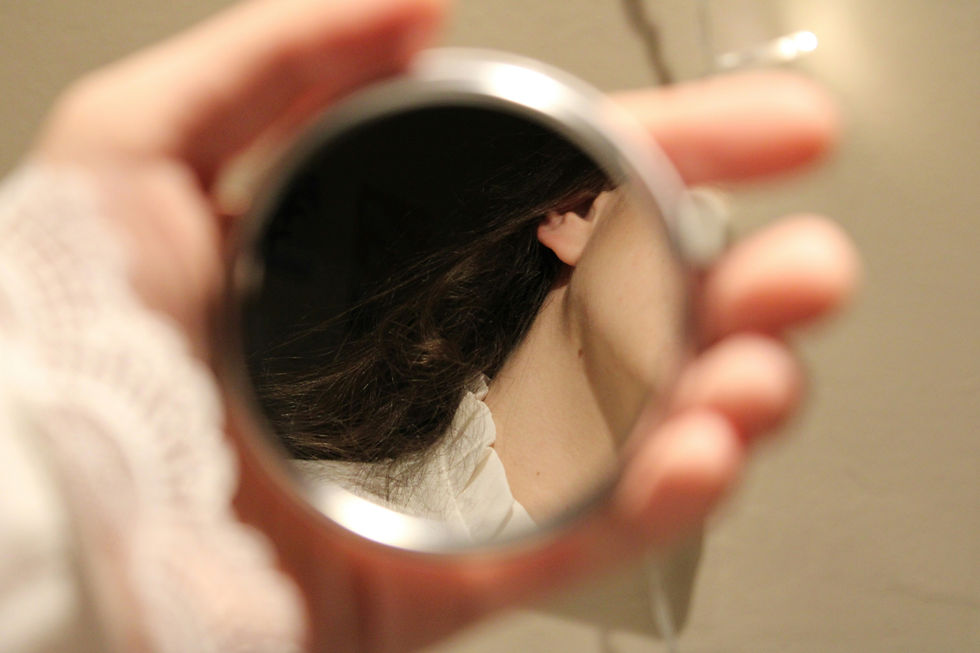
A new norm surfaced: standing in front of a mirror, glaring at parts of my body that I thought needed altering and taking photos of my face from all angles to constantly track if it had changed. Slowly, my thoughts became solely about food and appearance.
I struggled immensely at university. I was extremely unhappy and desired to be different. I strongly believed that those around me would love me more if I was smaller and prettier. At the beginning, my family and friends were unaware of how much I was struggling, but they began to worry when I started to lose weight and carried on losing it.
Before my summer exams, I went home and was diagnosed with Anorexia Nervosa, an eating disorder where individuals try to keep their weight as low as possible through different ways, including restricting their food intake, exercising too much or making themselves sick.
Getting the diagnosis carried new challenges that made my disorder decline more profoundly. With those around me knowing that I had a disorder, more people watched over me and tried to control my meals. I reacted badly to this. I was extremely fearful about potential weight gain and I was not ready to give up the disorder, so I limited my food intake even more. For me, my eating disorder had become a way of coping with difficult situations and feelings.
I started receiving help from a clinic a few days a week, but nothing seemed to get better. Both my physical and mental health rapidly deteriorated. So, I was referred to another clinic in London, which I attended five days a week. It was an intense routine - involving weekly weigh-ins, three therapy groups a day, blood tests and strict meal plans - which became my life for the next 10 months.

How the Eating Disorder Became a ‘Friend’
Those with an eating disorder can experience an internal voice in their head. A voice that provides them with rigid rules and negative thoughts. This is the disorder speaking.
For a few years, I trusted that voice in my head more than other people, more than my family. It felt safe, and it helped me feel in control. It became a ‘friend’.
I was not aware at the time, but this ‘friend’ only provided me with short-term anxiety relief. It helped me feel safe in a particular moment. However, in the long term, the disorder took away my freedom, and I became miserable and more unwell. The eating disorder was my ‘toxic friend.’
My Turning Point
My recovery properly started two months after I joined the clinic in London. I was told that hospital admission was a possibility if I didn’t start showing improvement. I was terrified.
Before this turning point, I wanted to recover, but I still fully engaged with eating disorder behaviours. Recovery only seemed possible for me if my body looked the same but became free from the thoughts and misery. This was unrealistic. From my experience, being physically unwell kept the disorder alive and restricted my ability to effectively engage with the deeper work.
Frightened about the possible hospital admission, I changed what I was doing and really engaged in the program. Yes, there were hard days, but my motivation to get better eventually became stronger than my fear of recovery. I became aware of everything the disorder took from me and realised that a hospital admission would take even more away. From then on, I did the difficult things and tried to unlearn every small rule my ‘friend’ had given me.
The Real Side to Recovery
Healing from an eating disorder is possible. What recovery looks like to me is freedom from the controlling and manipulative internal voice. I want to be stronger than the disorder, capable of making my own decisions and do what I both want and love. Get a university degree, travel, socialise, laugh and make memories.
A common misunderstanding is that eating disorders are a quick and easy fix. Assuming that those suffering will just ‘switch’ back to being ‘normal’. This is far from the truth. Recovery is not ‘one-size-fits-all’. It can be an extensive and exhausting journey.
Through therapy, I became aware that if there were times when I did not make pro-recovery choices, my recovery had not failed. A few mistakes did not result in failure. Recovery involves both ‘ladders’ (progress) and ‘snakes’ (setbacks), sliding backwards doesn’t mean you have to start from the beginning.
Processing after every meal helped me understand this. I would express my feelings about the food and what thoughts appeared. I became self-aware and honest. Meals frequently felt like setbacks, though over time, through processing, I learnt how to cope with uncomfortable feelings and know how to aim for progress next time. Resilience and persistence are key. Making mistakes does not take away anything you have accomplished.
Recovery Does Not Have to Be Perfect or Linear
There are still moments where I struggle, as unlearning strict rules that I believed in for so long takes time and resilience. There will be ‘ladders’, and there will be ‘snakes’. Instead of viewing mistakes as failures, I changed my perspective on them and saw them as helpful, providing me with insights and opportunities to better understand myself. The more I’m aware of the ‘snakes’, the stronger I become over my eating disorder. It is an ongoing journey, but perseverance is key.
Continuously engaging in therapy sessions, understanding the root cause of my eating disorder and learning to listen to my body helped me become this new version of myself. Doing the scary things repeatedly enabled me to get to where I am today. I now care for and nourish my body.
As time went on, my outlook on life changed. I now disregard the terms ‘unhealthy’ and ‘healthy’ surrounding food. I see exercise as a choice, not a need. I learnt that there is more to life than fitting into a smaller pair of jeans.
Learning from my hard days and not punishing myself for them ultimately led me to better relationships, an increase in self-esteem, more opportunities and a smile. Every day is a step forward, despite some days being challenging. Keep positive.


