


Claw Marks in my Memories: Healing from childhood loneliness
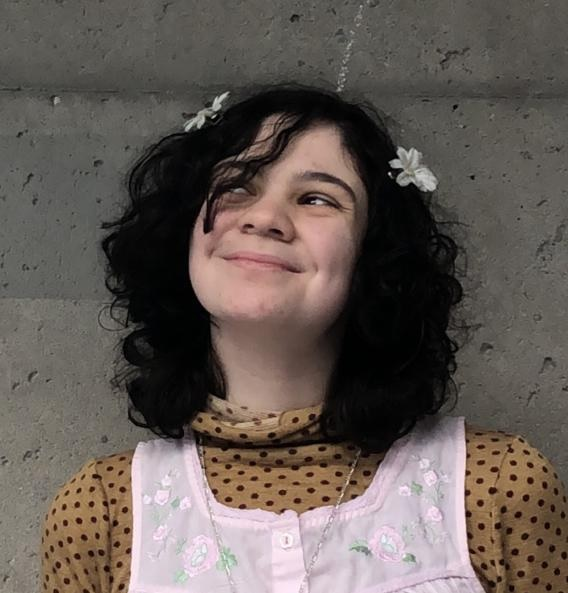

I’ve noticed something weird, the last few years: people think I’m friendly. I’m referred to as outgoing, and even, occasionally, extroverted. It feels like I’ve pulled off some magnificent con–because for much of my childhood, I was deeply lonely, and through my adolescence, that loneliness gave me terrible anxiety.
This is a story of growth before it is anything else–mostly because I started, socially, around rock bottom. My earliest memory in a classroom is of being laughed at by two girls. Though I can’t recall for the life of me what set it off, I remember their words, between shared glances and giggles: “We hate you! We really, really hate you!”
I went to multiple preschools, repeatedly transferring because teachers weren’t sure how to handle me. I was autistic, but at the time, autism was terribly underdiagnosed in those assigned female at birth. One study from 2022 says that about 80% of us are undiagnosed by the time we reach adulthood.
I’m immensely proud of how far I’ve come: at 25, I work in writing, make music on the side, and have people in my life I adore—my partner of two and a half years, and, yes, quite a few friends, with whom I enjoy life’s little joys, like thrifting or the theatre. But looking at childhood photos, I’m reminded of where I started: my awkwardness, my loneliness, the way I drew back from a world that didn’t accommodate my needs.
The friendliness people take for granted in me took years to build up–or, more accurately, it took years to break down the barriers around that friendliness. A lot of it started with one word: sonder.
On Sonder in All its Forms
The word sonder was invented by the author John Koenig. In his own words, it’s “the realisation that each random passerby is living a life as vivid and complex as your own.” I blamed the lack of sonder in others for my loneliness–even though I didn’t have much for my peers, either.
I caught the “not like other girls” bug early on. “Other girls” wanted nothing to do with me, so I figured the isolation would sting less if I leaned into it and saw myself as quirky and alternative. For years, I lost out on potential friendships because I figured that nobody in the world could possibly understand me.
Two things finally broke this spell.
First of all, I joined my high school’s concert band in eighth grade and discovered that nerdy, artsy kids were a dime a dozen–I was absolutely not alone or unique. We’d just been too shy to talk to each other, or in my case, maybe too stuck-up. A girl recognised the old anime on my t-shirt, a boy heard me playing the Pokémon theme song as I warmed up my flute, and before I knew it, I had a whole circle of wonderful weirdos in my life, with whom I fit right in.
Secondly, I learned how to meet people halfway. In tenth grade, I was invited to my first house party–the exact kind of thing I’d spent most of high school rolling my eyes at. Truthfully, I was terrified: what if I was peer-pressured into doing drugs? What if people wanted to play spin the bottle? Would I have to kiss somebody? I’d never kissed anybody!
And of course, worst of all: what if I was just being invited as a joke?
Spoiler alert: I was not forced to do drugs or kiss anybody, and I had a really great time. Most of the house party was just hanging out with people, cracking jokes, and listening to music. I realised that these classmates who’d invited me weren’t just basic party girls: they had passions, dreams, and talents. And all this time, I’d never bothered to give them a chance. That’s sonder for you: everyone has an incredible story, one worth hearing.

On Self-Sonder
Letting people in is just half the battle: you also have to see yourself as worthy company. That’s hard–maybe even harder than reaching out in the first place. Under my pretentiousness, I was deeply insecure, and painfully aware of all the things that held me back–my awkwardness, my anxiety, my access needs as an autistic individual. For years, I let in people who said they cared about me, but treated me terribly. I became convinced that I had to compensate for all that I was, and that ended with me feeling even lonelier, and worse, believing it was what I deserved.
But when you see everyone as having a rich inner world worth exploring, it’s easier to see that in yourself, too. You have stories to tell, a sense of humour, something you love to do. And even if it feels like you don’t, it’s never too late to change that.
I’ve seen people my age beat themselves up for never daring to try something new or reach for an opportunity, and I wish I could just grab them all by the shoulders and tell them that there’s still time. The next love of your life–a person, a place, a passion–could be waiting right around the corner, and they’ll love you right back when you find them.
For way too long, I kept myself in a box, one taped tightly shut, so people couldn’t even peek inside. That wasn’t fair to anyone–me, least of all.
On Unfairness–and Not Settling
Sometimes, though, it’s not you being unfair to yourself, or some person in your life being unfair to you. Sometimes the unfairness is bigger than that, and entirely out of your control.
I try not to play the “what if” game–often because what’s done is done–but more than once, I’ve found myself wondering if, in a kinder world, I wouldn’t have been such a lonely kid. If autism acceptance had been further along, would I have gotten the support I needed? If homophobia hadn’t been so prevalent, would I have made it through elementary school without being called slurs? In a less misogynistic world, would I have avoided the “not like other girls” trap? There’s no way to know.
That said, today, secure and confident in all that I am, I will not stand for mistreatment from anyone. Not friends, not family, not a partner.

Reaching out is a balancing act: you have to see the good in others, and in yourself. The world isn’t making that any easier–social media, climate change, AI, pick your poison–but when you pull it off, whole new worlds open up.
Even years down the line, as friendly as I seem, there’s still pain from what I let people do and say to me in the past. I’m still recovering from the harmful relationships my insecurities trapped me in, and I will be for a long time. Childhood photos are still bittersweet, portraits of a kid who was frustrated and misunderstood, often hiding their face in a book. I wish I could tell them all about the friends I have now, and how I never compromised who I was to make them.
But now, I’ll know my worth for the both of us.
This article has been sponsored by the Psychiatry Research Trust, who are dedicated to supporting young scientists in their groundbreaking research efforts within the field of mental health. If you wish to support their work, please consider donating.


