


Dastarkhwan: What Eating on the Ground Means for Community and Kinship

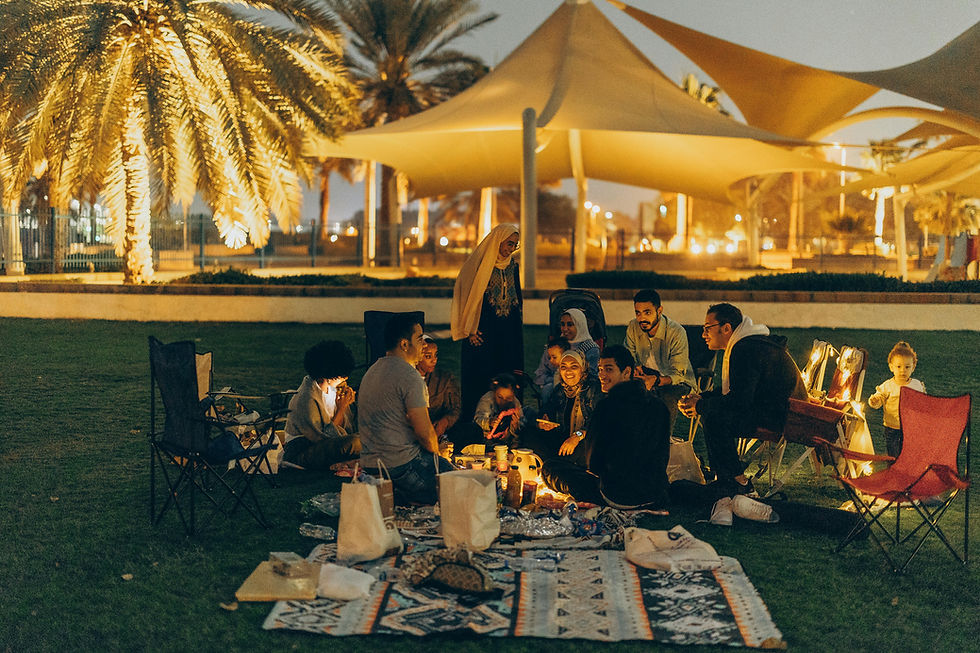
In all our homes, we all have dining tables to serve our everyday needs, but if you know South Asians, we often have more than the selected number of people who can sit at the table. So, what do we do? A Dastarkhān, or dastarkhwān is the name used to refer to a dining spread on the ground, on top of gorgeous tablecloths, laid out with many different dishes. Found across Asia, this concept allows for many people to sit comfortably; ideal for when the gathering is large and space is limited. During Iftar parties or Eid, Dastarkhwan will be found across homes, filled with scrumptious desserts, mouthwatering savoury dishes, dazzling drinks, and dates, often decorated with flowers, or lights. Even if it is just throwing a cloth on the floor to eat together, it is a testament to the love of community gathering in a South Asian home. No matter how big or how small a home is, people's hearts for their loved ones are always bigger.
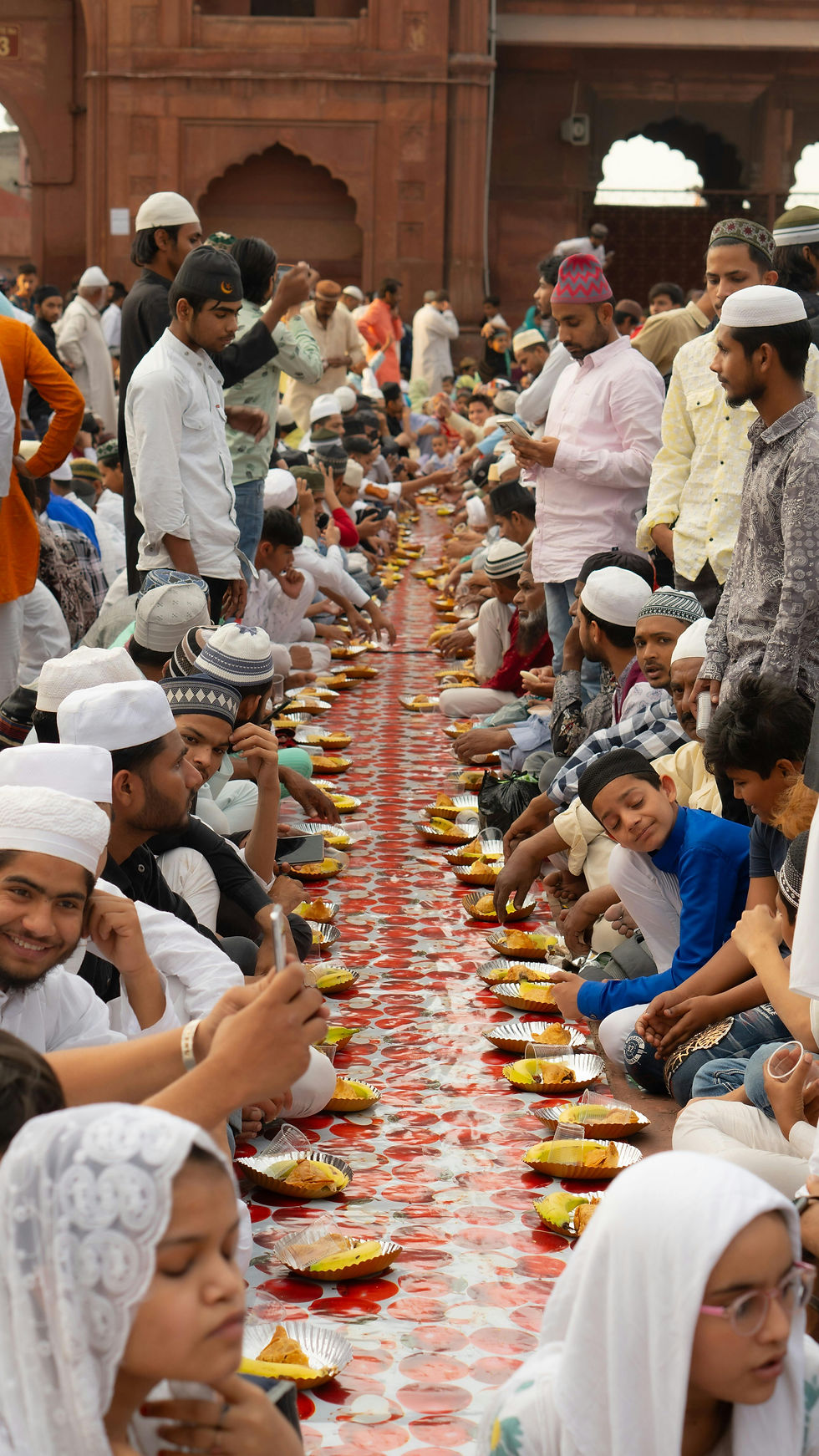
Growing up, I was surrounded by community gatherings; every event, birthday, anniversary and even grief was marked by relatives, friends, neighbours, and well-wishers coming together. Our humble three-bedroom apartment would be filled with fifty to sixty people. And somehow, there was always space for more. Living in India, I was always overwhelmed by the presence. It is only now, that I am working as a culture and travel journalist, exploring how community shapes culture, and researching friendship, that I understand the importance.
In my career as a journalist, my work around friendship has appeared in Vogue Arabia, Vogue India, Hardcopy Canada and Elle, and as someone who has travelled to more than twenty-five countries, I have begun to crave a big group of people to be surrounded by.
I first felt the absence of a community when I moved to London to pursue my master’s in 2022, which marked the beginning of my research on friendship and community. This led to my master’s thesis on how women use friendship to increase their political agency and it is the reason I wanted to understand the importance of Dastarkhwan in our lives.
Today, our world is going through a loneliness epidemic. We are falling short of people to rely on, and our village is rapidly shrinking. Our work culture, which is fast-paced and demanding, pushes us towards a life which is being lived in a hurry. There is a heightened focus on the idea of ‘me.’ The individual was always supposed to exist within a community. We were not supposed to lose our community in pursuit of ourselves, but bring it along with us. Community can be all the people who form a network of support for you. It is hard to build one outside our families, but if there is one thing I have learnt from South Asian homes is that having your door open and feeding your loved ones can get you there.

Sitting on the floor and eating during big gatherings is common across Asian homes. In many medical practices, such as Ayurveda and Unani medicine, sitting on the floor and eating, either with the legs crossed, or with one leg pressing against the stomach, is supported for its health benefits. Being connected to the ground, one is reminded to be mindful, away from distractions. Leading nutritionist, Rujuta Diwekar, whose list of clients includes popular Bollywood celebrities such as Kareena Kapoor and Alia Bhatt, has encouraged sitting on the floor and eating. She has strived for this act to get rid of the racist connotations, as sitting on the floor has been looked at as something uncivilised, when it is merely just an eastern concept and not a western one.
While we might think we don’t practice this frequently, think of the many picnics you have taken where a makeshift Dastrakhwan exists. Putting together a quick brunch or lunch, everyone sitting cross-legged, laughing, and talking to each other. Not getting up and finding a ‘proper’ place to sit but making do with the ground.
As someone who has slowly broken away from screens during lunch, and prefers to find company while eating, I am cognisant of how frequently we alienate ourselves while eating. In today’s time, especially in our sanitary work and study environment, it is a struggle to reach out to someone to share a meal. When we were kids, we would often have friends in school to share our lunch tiffins with. Eating was never meant to be a solitary activity. Whether we analyse Mediterranean culture, Asia, or even in communities of Africa and Latin America, food was a tool to build friendships and strengthen communities. What is the first thing we do when we are celebrating a milestone in our lives? Take the people we love out to eat, or cook for them and have them over. Food has always been a community experience.

In one of the Eid Potlucks, a gathering celebrating Eid, my friend hosted in her apartment in London, she realised more than a dozen people were coming. Instead of tables and chairs, she pulled out her gorgeous carpet, and we all sat down together to feast, making it into a Dastarkhwan. It is an entirely different experience to be interacting with people while looking at them as a whole. While in a traditional dining setting, we tend to look at just the face, on the floor, we are using our whole body to converse. During that event, there was so much joyous laughter and passing of food. The idea of celebrating Eid alone was daunting, and this day turned out to be one of my favourite get-togethers. As an International Student in London, it takes a while to find your feet. You are always afraid of feeling lonely in the city. However, London’s International Student community often comes together to cook for each other and share food, always having a Dastarkhan ready, making the experience much less lonely.
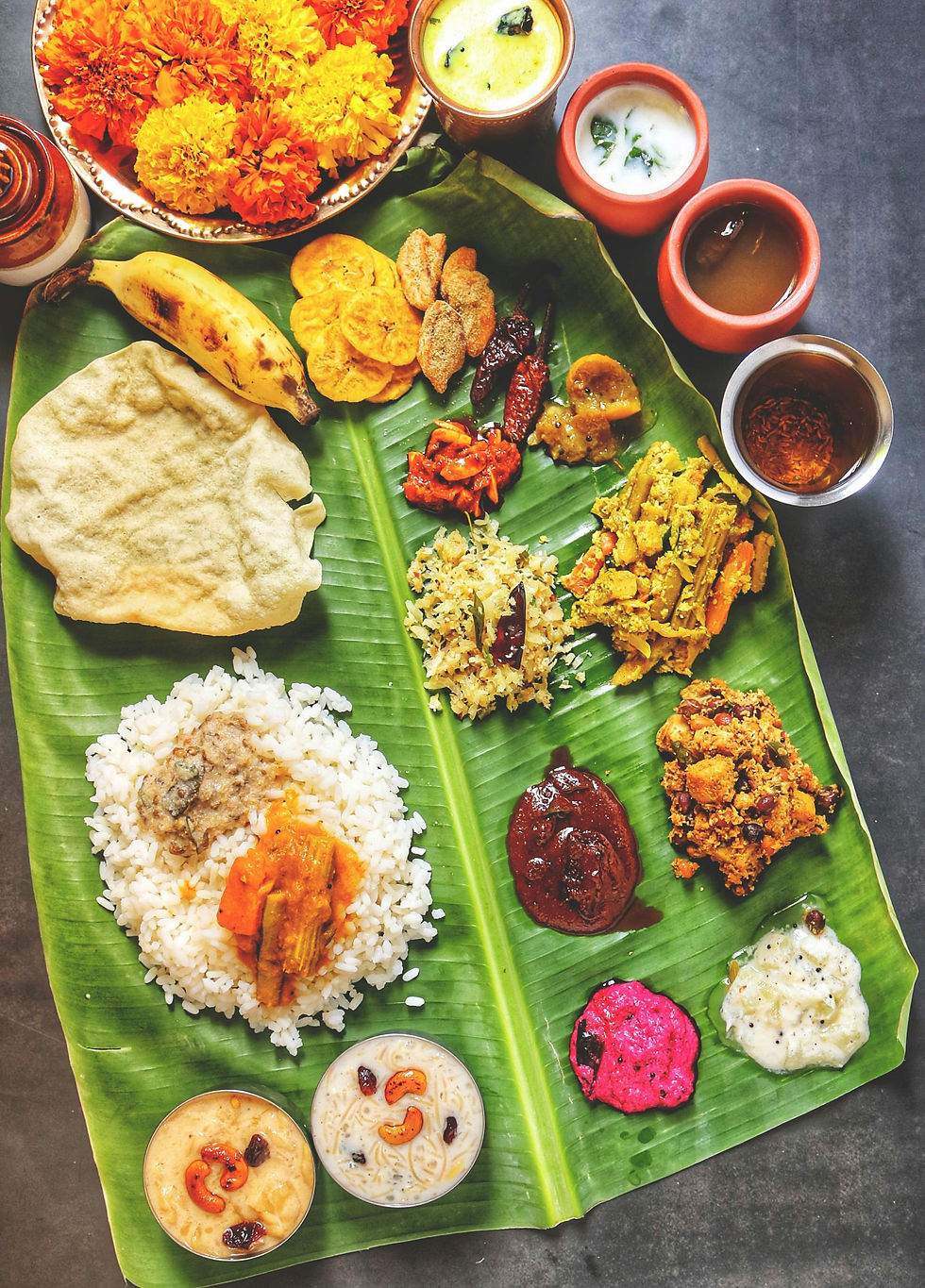
In South Asia, a variety of cultures exist. In Rajasthan, chowkis or low stools surround a low table, often for very large gatherings. In Northern India, durries or carpets are used to set up dining spaces. In Southern India, leaves, which are biodegradable plates, are spread on the ground to eat food, which is an environmentally sustainable way to be connected to Earth, and economic enough to include as many people as possible. Sitting on the floor humbles us, strips us of pretentiousness as we are more connected to the Earth. Studies show that this form of dining often increases the strength of our communities, as people can make more friends that they can rely on for any crisis or help.
Sharing meals with people is known to have mental health benefits. Food releases dopamine, and sitting with people releases oxytocin, endorphins and dopamine, otherwise known as the feel-good hormones. Unless we are sitting with some terrible company, it is always a good bet to have people around while eating.
Prior to the world order shifting during colonial times, a Dastarkhan was a more common method of dining. With hot temperatures, most Asian houses use marble, granite or travertine for their floors, which are materials that have a high thermal mass. This allows the floors to be cool even in high temperatures.
Historically, humans used to gather around a fire and eat. This is not to say the fine dining isn’t appropriate, or to discourage it, but in a world that is undergoing a loneliness epidemic, with weak kinship and community ties, it is important to remember that humans cared less about the structures and luxury and more about the people themselves. From the laborious creation to its consumption, food is a community act.
Today, we are often glued to our screens, or eating our food in a rush, sometimes on the go, making it difficult to mindfully engage with our food, the people who create it, and even ourselves.
According to The World Happiness Report, communal dining is a key method to decrease feelings of loneliness. Sharing meals can make us happy, and the more the merrier, right? As a South Asian, this is my one piece of advice; have a Dastarkhwan ready, just in case. You never know when your village might need it.
This article has been sponsored by the Psychiatry Research Trust, who are dedicated to supporting young scientists in their groundbreaking research efforts within the field of mental health. If you wish to support their work, please consider donating.


