


Kashmir Beyond Conflict: A Story of Mental Health


Two Kashmirs live on the same valley’s soil: one in its streets, the other in the memory of those who fled.
The land of mystical poets, now entangled in geopolitical debates, highlights how geography shapes mental states differently across generations and distances. The internal lives of Kashmiri residents now differ significantly from those of migrated Kashmiris. Neither experience is uniform nor reducible to a single story, yet patterns emerge.
As a Kashmiri who grew up watching older family members quietly battle mental health issues, and who studies a Master’s in Psychology and Neuroscience of Mind-Body Interface at King’s College London, I came to understand that the most important wounds in this story are the ones that come from loss, migration, and buried memories that are constantly present, but rarely discussed. To understand Kashmir today, we must look beyond the politics and borders and examine the mental states of people who carry its story.
Fragments of Home: The Mind in Exile
The 1990's saw a boom in emigration from Kashmir during a period of violent conflict between insurgents and the Indian government. Killings and violence across the valley led to displacement of Kashmiri Pandits, Muslims, and Sikhs. Kashmiri families left behind homes, lands, businesses, temples, and an entire neighbourhood built over generations; ultimately disrupting their deeply rooted sense of identity. In the years that followed, many were compelled to adapt to new cultures, climates, food habits, and festivals, to the point that much of their own identity was lost. Yet, traditions like the Janthari (Kashmiri Hindu calendar) endured, often surprising others with the depth and richness of their heritage.
Kashmiri migrants struggled with persistent hypervigilance, where safety is never entirely internalised. A silent but constant survivor's guilt is often carried by those who left while others stayed. What is often romanticised as nostalgia takes on a more burdensome form. Involuntary flashes that blur the lines between the past and present, functioning less as comfort than recurring psychological pressure. This pulls future generations of Kashmiri migrants into a continual loop of transgenerational trauma and identity crisis, where identity is shaped not through direct memory but through narratives of loss, silence, and longing. What emerges is a more subdued struggle. Many question whether they have the right to grieve for a homeland they never lived in yet feel a strong connection to.
Chronic stress and social dislocation extend well beyond Kashmir, as research across displaced communities worldwide links forced migration in older adults to adverse mental health outcomes and cognitive decline. This sits outside conventional diagnoses of PTSD or depression yet is no less debilitating.
Mental Health Within the Valley Today
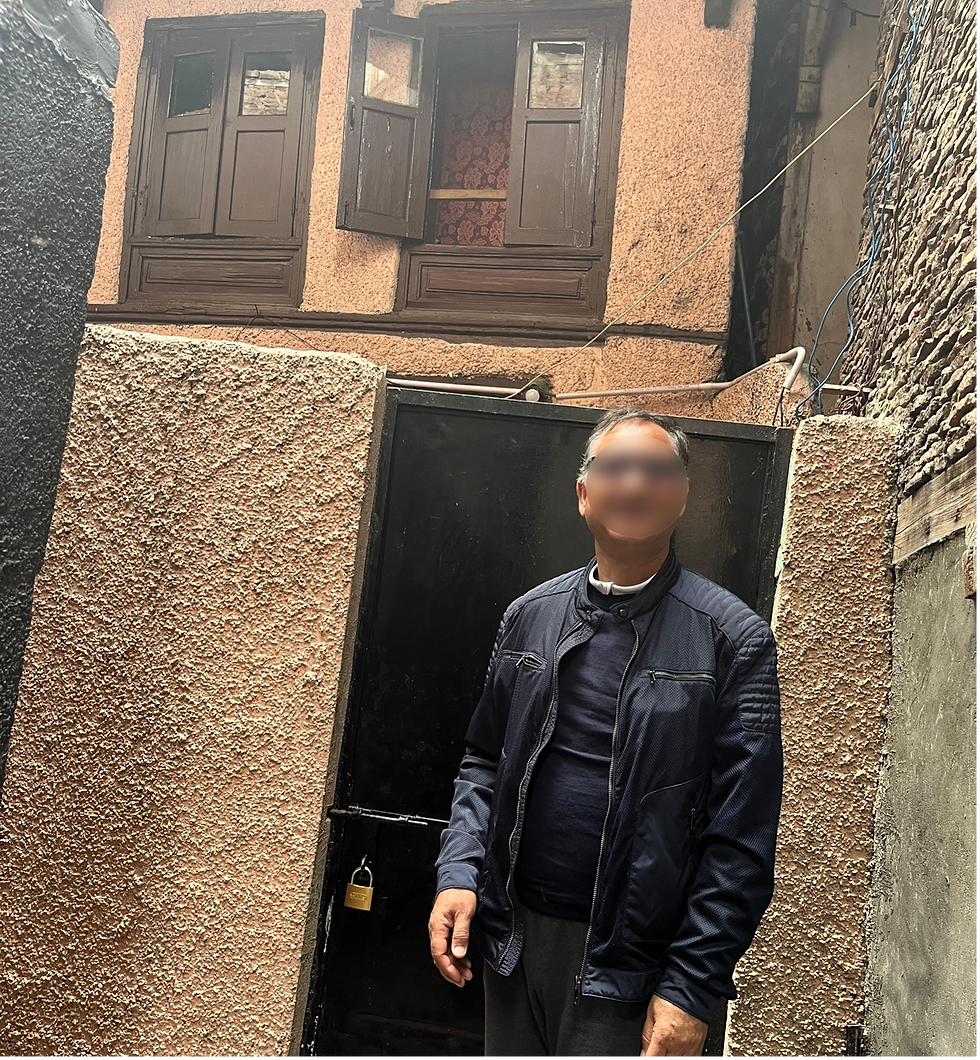
For Kashmiris who currently reside in the region, it is not a sudden rupture but an ongoing continuity under shifting circumstances that shapes the psychological landscape. Everyday existence takes place in a setting of long-term uncertainty, periodic instability, and political complexity. Dr Insha Rouf’s research into dementia found a higher rate of DNA variations associated with Alzheimer's Disease in the Kashmiri population; findings distinct from other Indian populations.
In terms of psychiatric burden, formal mental health infrastructure has been historically limited across the valley, which helps explain why traditional and faith-based healing remains embedded in everyday life. Spiritual healers such as Pirs and Fakirs are frequently sought after by many Kashmiris experiencing psychological distress, with reports suggesting that a majority of psychiatric patients consult spiritual healers before or instead of clinical services. These practices reflect far more than a replacement for clinical care. They are deeply ingrained in how Kashmiris perceive suffering and community.
Decades of political and economic volatility have led to a higher prevalence of depression, anxiety, and post-traumatic stress disorder (PTSD). These experiences are shaped by a range of interrelated factors, including uncertainty about the future, the scarcity of job opportunities that drive young people to migrate to different states, and wider consequences of residing in an atmosphere of protracted conflict, such as constant riots and severe military surveillance.
An important factor is economic instability. Since tourism contributes significantly to the local economy, changes brought on by security issues or local events may have an immediate effect on livelihoods. Reduced tourism can lead to financial hardships and unemployment, especially for younger individuals starting their careers. Young individuals with higher education have been occasionally seen taking on informal jobs, indicative of the sad reality and pressure of the job market.
Coping, Culture, and Evolving Mental Health Care
Adaptation for survival is common. Coping strategies vary in response to these demands. While some people rely on routine, community, or faith, others may turn to maladaptive tactics like substance abuse. A 2022 report found an increased rate of self-medication in the Kashmir Valley, with respondents citing stress, trauma, and limited access to formal mental health support as contributing factors. Alongside this, mental health difficulties remain stigmatised. Cultural misconceptions and fear of judgement, frequently mean the difference between intervention and prolonged, untreated suffering.
Despite enduring stigma and mental health challenges, initiatives have been introduced to improve access to care. One example is Tele-MANAS, a 24/7 mental health helpline designed to help bridge gaps in mental health services. Its growing reach has been documented by journalists covering mental health in the region. Journalist Irfan Amin Malik reported on the positive impact of Tele-MANAS on Kashmiri women experiencing mental health issues. Integrating telepsychiatry initiatives with broader mental health education and community outreach can empower Kashmiri residents to seek professional care rather than turning towards substance use or spiritual healers. This combined approach helps improve help-seeking attitudes and build resilience in low-resource settings.

Beyond Comparison
It is not about comparing hardships but understanding how geography reshapes emotional landscapes. Losses of land, home, safety, and belonging can take many different shapes, yet they all carry a remarkably similar weight. These experiences are often overlooked within dominant political narratives, resulting in a silent burden of invisibility and unresolved grief that is neither generally acknowledged nor properly processed.
As these emotional traces endure over time, they seep into memory, identity, and mental wellbeing. The impact of displacement and protracted uncertainty is not limited to a single instance but is subtly passed across generations. Living in uncertainty influences adaptation and coping over time, while displacement can reshape an individual’s susceptibility to psychological and neurological stress. The Kashmiri experience must be acknowledged without oversimplification, as they are greatly impacted by their respective circumstances.
Indian-administered Kashmir valley, once remembered for its breathtaking location, physical beauty, and distinct culture, is now more often defined by politics, borders, and history, while far less focus is given to the mental state of Kashmiris. The 22nd of April 2026 marked the one-year anniversary of the tragic terror attack in Pahalgam, and in this piece, we would like to acknowledge the lives lost during this event.


