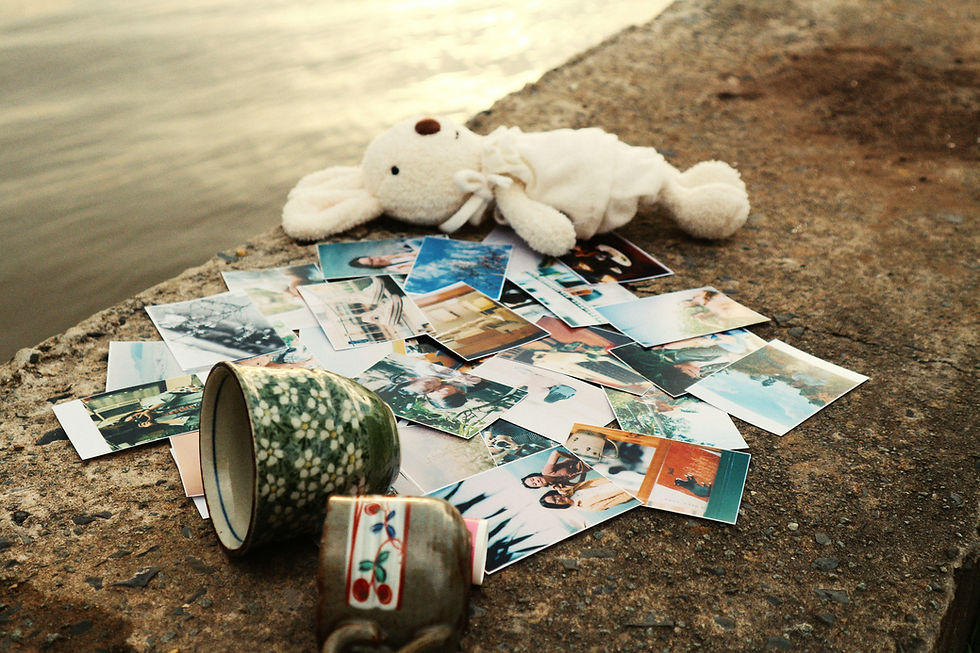
Nostalgia: Aching for the Ordinary

How nostalgia makes us yearn for our own memories.
Time moves forward whether we follow it or not. Nostalgia, however, waits. It lingers in old songs, in familiar streets, in the scent of a season or a person we thought we had forgotten. And when it finally returns, it pulls us gently, and sometimes painfully, back into a moment we can no longer touch.
Nostalgia is one of the few emotions that can ache and soothe at the same time. It can be described as a bittersweet affect, a blend of longing and warmth, loss and belonging. And yet, most of us know it long before we can even define it.

As a psychology and neuroscience graduate, I am deeply interested in how memory and emotion are embedded in the brain and how they intertwine with the body. After completing my MSc in Psychology and Neuroscience of Mind-Body Interface at King’s College London and returning home to Vienna, I found myself overwhelmed by nostalgia to the point where I could feel it tightening my chest. I wanted to understand why certain moments linger so vividly and why they ache in such a tender, almost physical way.
Andy Bernard from The Office said it better than most philosophers: “I wish there was a way to know you’re in the good old days before you’ve actually left them.”
Sometimes we do know. There are rare, glowing moments in life when we sense, even while they are still happening, that we will one day look back on them with tenderness. A burst of laughter among friends. A late-night walk in a new city. An evening with someone special. A perfect meal you once had. An activity you have wanted to try out forever. A day that seemed ordinary until it wasn’t.
But more often, nostalgia reveals its value only afterwards. And then it comes quietly, unexpectedly, in the smallest triggers: a song, a street corner, a smell.

Although nostalgia feels warm and familiar today, it was once seen as an illness - first described by physician Johannes Hofer as a form of homesickness that could cause emotional and even physical symptoms. Modern research views it very differently: what feels emotional and intuitive is deeply grounded in psychology and neuroscience.
Nostalgia is understood as a fundamentally social emotion that strengthens belonging and connectedness, especially during transitions. Neuroimaging studies show that nostalgic recall activates brain regions involved in autobiographical memory, self-reflection, emotion regulation, and reward. However, nostalgia is not uniformly uplifting. It can increase positive affect, yet its spontaneous occurrence is linked to more mixed well-being outcomes, reflecting its bittersweet nature. Still, this bittersweetness appears adaptive: nostalgia may buffer self-esteem when loneliness is present and help keep our sense of self steady during life changes.
Taken together, nostalgia is not merely an emotional echo of the past but a mind-body regulatory process that intertwines memory, social connection, and physiological calm.
After spending a year in London - my dream city and a place I had imagined for years - coming back home to Vienna has made nostalgia feel stronger than time itself. It sneaks in through old routines: a song I used to listen to on my way to class, a picture of a street I walked down every day, the particular kind of London rain that somehow smells like concrete, cold air, and new chapters. Looking back, the whole year feels strangely cinematic, though not always in the graceful, glossy way of a Hugh Grant romantic comedy - more like living inside Bridget Jones’s Diary: slightly chaotic, a bit ridiculous, unexpectedly heartfelt, and full of moments that now feel larger than life.

The tiny, unimportant moments become part of the whole movie. And the funny thing is: I didn’t expect to miss the things I miss so deeply now.
The stressful library days during exam season. The packed tube at rush hour, where everyone collectively gave up on breathing. Nearly getting swallowed by tourist crowds in Covent Garden. All the things I once rolled my eyes at, I now look back on with an affection that feels almost irrational. But that is what nostalgia does. It edits your personal history, gently but decisively, colouring everything with a glow you only recognise afterwards.
Studying for exams becomes less about stress and more about sitting next to friends who were struggling just as much.
Rush hour becomes the prelude to meeting someone you really liked. Even the tourist chaos becomes a reminder that you lived in a place that people dream about. It turns out the small, in-between moments become the ones you ache for later. How often do we wish for just one more normal night at the pub, the kind we had a hundred times without realising they were becoming memories as they happened?

Our generation - the much-discussed, occasionally over-analysed Gen Z - seems to feel nostalgia on an unusually deep level. We have an almost instinctive urge to hold on to every moment, to document everything, to romanticise even the most mundane parts of our lives. Not because we’re dramatic (well… maybe a little), but because time feels like it is moving faster than it used to. Where our parents might have taken one or two blurry photos at a concert, we now see an entire sea of glowing screens held up toward the stage. People aren’t just filming, they’re archiving - we’re building small digital museums of our own lives. After all, this is an attempt to slow down time. Nowadays, academic, financial, and social pressures make everything feel compressed - careers that start earlier, expectations that pile higher, and a world that keeps spinning even when we’re not ready to keep up. Capturing a moment becomes a way of stretching it, saving it.
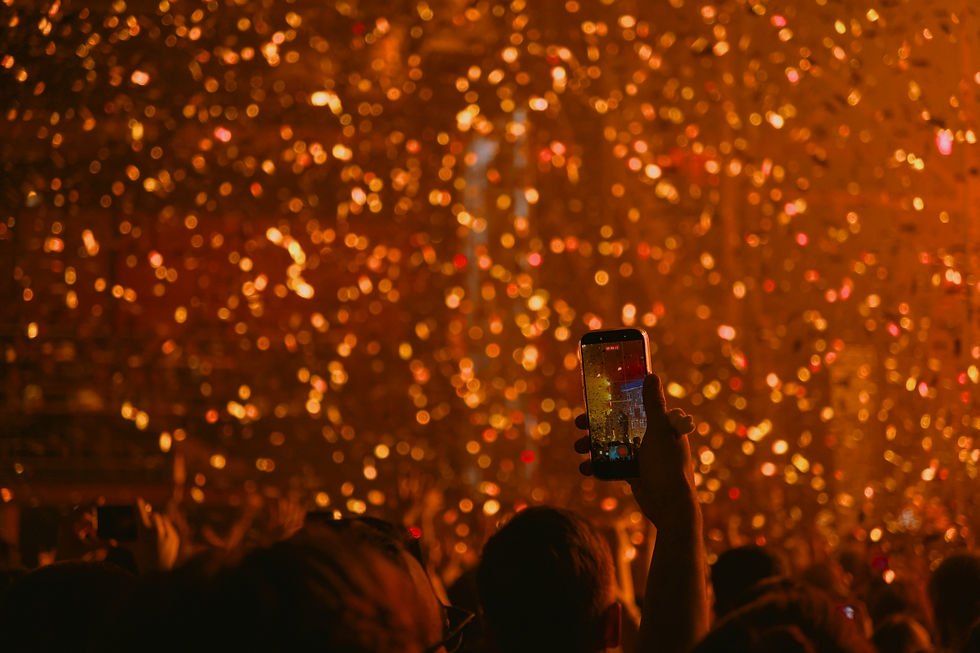
Even ABBA sang, “Sometimes I wish that I could freeze the picture and save it from the funny tricks of time.” And perhaps that is what nostalgia really is: an instinctive attempt to hold still what refuses to stay.
Maybe nostalgia is less about longing for the past and more about recognising the parts of ourselves we left there - our younger versions who tried and learned and the places and people that held us. Arriving long after the moment has passed, nostalgia pulls us back with a tenderness that feels almost physical, reminding us we once lived fully in a time we didn’t yet know we’d miss.
And sometimes it hurts.
But perhaps the ache is just evidence that something truly mattered.