On Health Anxiety as an Artist

Updated: Feb 26
Eight years ago, I went to a friend of mine in distress. I had a lump or a bump or a cough or a premonition.
“I am dying,” I told her. I was certain of it.
“Or, are you just about to put an album out?” she asked.
My name is Charlee, and for the better part of twelve years, I’ve been a willing participant in the love-hate relationship most artists have with the music industry. The music industry is a peculiar trigger in my life. Anytime I move forward - record new music, release new music, make new plans - I backwards dance into old anxieties of mine. Particularly, health anxiety.

Health anxiety is something of an actor. It’s quite convincing. Of course, there’s a surplus of information tying the psychosomatic mind to material symptoms, but it always felt uniquely devastating in the moment. I’d have a stress-related, mid-back ache, and suddenly I was storming my physical therapist’s office wondering if she could feel a tumor between my vertebrae. I felt a strange sensation anywhere—and I mean anywhere—in my abdomen, and I was contemplating not boarding my plane because, “What if my appendix had burst?” Routine as that procedure may be, the timeliness of any ER visit was important.
I’m not sure how it works really—this tie between my health anxiety and my music—only that there is something tremendously disquieting about the affair of sharing my work. Looking back, it’s as though I saw in it a hidden meaning, a certain reward that felt unearned. When I put my first EP out in 2014, I was convinced it would be a posthumous release. It didn’t feel deserved unless, of course, there was something to even the scales. I told my mother repeatedly, as I spiraled in my apartment, of which I rarely left, “I have Leukemia.” “I have breast cancer. “I have lymphoma.” She was a dutiful listener, but nothing she—or anyone else—ever said quelled the fear.
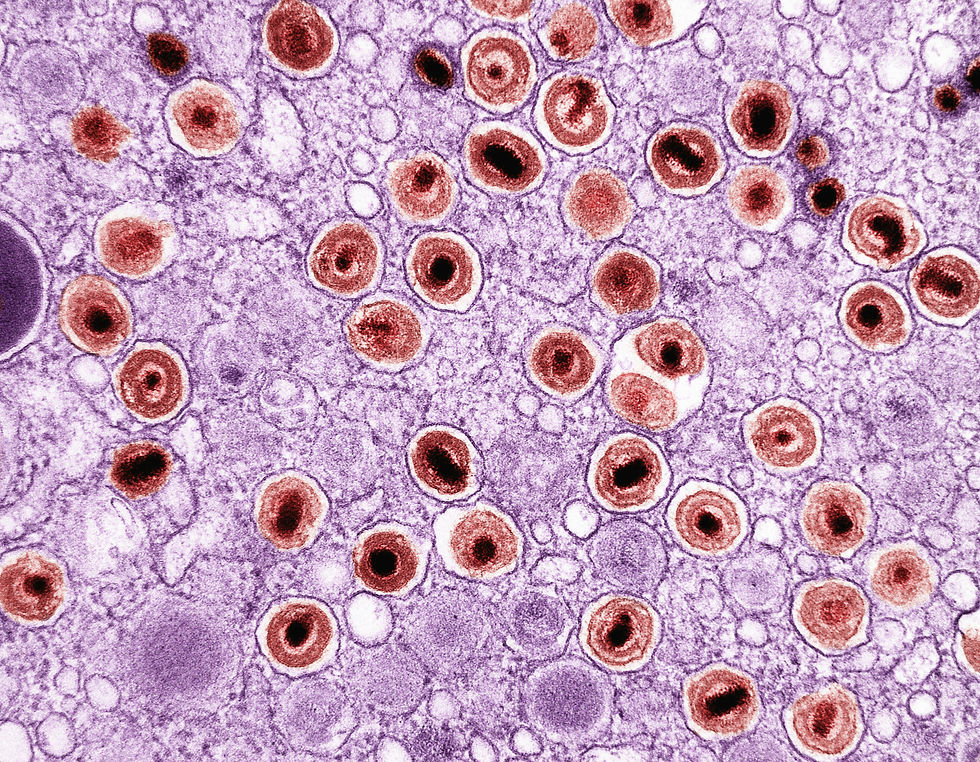
The onus of the health-anxious is to understand that we have anxiety, and that our anxiety is cyclical. We uncover Something of Great Concern somewhere on or in our bodies, we fixate to the point of hysteria on the Something of Great Concern, the stress of this causes Something New of Great Concern to show up on or in our bodies, and the cycle continues. For my part, I rarely experienced a break in this action. There were no days off. I was always worried about something life-ending, and I walked around all day long like I was in wait of a court mandated death sentence. In John Green’s The Anthropocene Reviewed he writes, “I’ve always felt like I need a vice. I don’t know whether this feeling is universal, but I have some way-down vibrating part of my subconscious that needs to self-destruct, at least a little bit.” This seemed to describe part of the attachment I had to this chronic anxiety.
The thing was, I didn’t think my body could be that affected. It was science-fiction—this idea that I could spiral so intensely and manifest Something of Great Concern. I could blame this on society and its inability to teach people how to be with themselves, how to tune in, how to listen to what their bodies had to say.
The body, itself, is always speaking.
I remember sitting in my therapist’s office a couple years ago when she mentioned that sometimes something shows up in our bodies for no reason at all. Or if there is a reason, it’s most likely harmless. This did not register for me. The body makes no sense to me. It seems so fragile. I sat with myself and all I could think was "how is it possible something isn’t wrong?" Perhaps I could look back at my childhood, at the tumultuousness of my father, at his insistence that I had no work ethic because art, in his mind, isn’t work, and draw a line between putting out an album and dying from disease. My worth was all wrapped up in it. And by that, I mean the lack thereof. He told me, in a way, that I didn’t deserve to make art. So now I was evening the scales of pursuing this flimsy venture by dying.
There is a lot for me in the general unfairness of the world. For a while, the question was, why someone else? Why not me? It was never why me? There’s such a lack of compassion in this kind of anxiety. I battered myself all day long for all the good I felt was present in my world. Being overly concerned about joy entering made me the type of person to police my joy, to fear my joy. Eventually, I became addicted to chaos. As John Green further writes, “The pleasure of smoking for me wasn’t about a buzz; the pleasure came from the jolt of giving in to an unhealthy physical craving.” I would rather live in a constant state of panic, I would rather know something was wrong than wait around for something to go wrong.
A Revelation in Yoga
It was a passing, random moment in a yoga class that gave me pause. We sat as a collective in a long-hold, shaking, dripping, looking around the room at each other, and then to the teacher for some kind of indication that time had ticked down and we would be transitioning out of the pose soon. Instead of guiding us out, the teacher asked us to tune in. “We’ve been here before,” she said.
So, too, had I been in the position of fearing for my life without true cause. So, too, had I sat overheating on the couch, my heart racing, thinking I was seconds away from cardiac arrest, only to work myself up without once acknowledging the likeness of every panic attack, which began with heat, then transitioned into a racing heart, then culminated in the rapidness of breath. Not once had the low pain in my abdominals been anything more than a cramp, flatulence, or a food item that didn’t agree with me.
Acceptance can feel oddly similar to giving up. There’s a weaponised aspect to it. When we talk about the powers that be, there’s no sole perpetrator. I felt uncomfortable allowing my hypochondria to exist without having to name the cancerous potentiality of each and every material symptom. I’ve been taught to be at war with myself, with everyone else. I’ve been taught to live in fear, that there isn’t enough time, that good things can only be done when we’re young, that there was only so much resource to go around.
Perhaps, what I’m getting at, is that anxiety, as genetically predisposed and chemically manufactured as it is, is also a weapon of society. As Maya Angelou said, “Art is not a luxury. The artist is so necessary in our lives. The artist explains to us, or at least asks the questions which must be asked.” And perhaps, keeping the artist down is the point.
In 2013, my father told me he was uncomfortable helping me move to Nashville to pursue my music career “if you’re still dependent on therapy.” But what he was really telling me is this: anxiety is not normal. You shouldn’t need therapy. If you do, something is wrong with you.

What if, instead, those without anxiety were the ones experiencing a rarity of circumstance? They were insulated, in some way, and the rest of us were true products of our environments? That’s how I started to see it, and it made me angry. He, being swayed by the ableist world at large, which undervalues the artist in every workable way, had led me to believe that I was othered. He made me feel, in a sense, that I had to even the scales by suffering in some way to bring my art into the domain. He had made me feel guilty for not being a cog in the machine. For having time on my hands to create. He had weaponised my freedom, the idle hours of my day, the moments of quiet connection with the self.
What I came to find is that I don’t owe him or the world my suffering. Art does not need a reason to exist. I don’t have to account for the hours I spend working on something that’s self-interested. The best thing I could do is rebrand my condition to decentre myself in my own suffering.
This is not my doing. This was done to me.
This article has been sponsored by the Psychiatry Research Trust, who are dedicated to supporting young scientists in their groundbreaking research efforts within the field of mental health. If you wish to support their work, please consider donating.