The Bliss of Not Knowing: How Escaping the News Cycle Made Me Happier

Updated: Dec 9, 2025

It turns out ignorance really can feel like bliss, though I'm still deciding whether that makes me carefree or careless.
I’m Jessy, and five years ago I left my job and moved from London to Amsterdam. As a health and wellness writer with a background in broadcast journalism, I hadn’t realised how constant my exposure to news had become until I changed cities and, unintentionally, stepped away from the relentless churn of headlines. With a little distance, I finally had space to breathe and noticed just how saturated my mind had been.
If any of this feels familiar, you’re not alone. While writing this piece, I’ve discovered that many people feel overwhelmed or helpless in the face of an often unrelentingly bleak news cycle. So I’ve also spoken to experts about why the news can have such a profound impact on our mental health and what you can do to manage it.
Since moving from London to Amsterdam, where my grasp of Dutch is about as strong as the UK's grip on the cost-of-living crisis, I've been happier. It's not just the cycling along canals or the comforting knowledge that bitterballen is within arm's reach (though they definitely help). What's surprised me is embarrassingly, but blissfully, unaware I am of Dutch politics.
If you're wondering why I haven't learned the language yet, that’s a fair question. I’ll make the argument that I have tried. I can confidently order a coffee and hold a great conversation with anyone under the age of ten, but that's about as far as my skills can get me. So, when it comes to the news and politics, I’m lost. And yes, while some media outlets cover Dutch news in English, I rarely go searching for them, so when I pass a newspaper stands or see Dutch friends posting on social media, the headlines pass me by without meaning.
Before you conclude your judgment, let me rewind to the life I left behind.
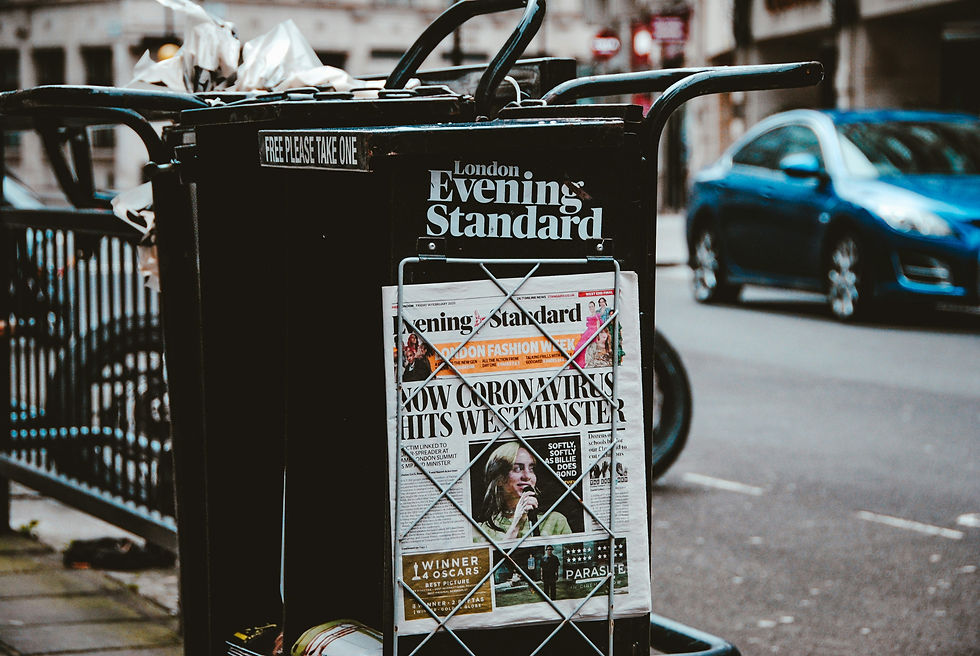
London 2020
Before I left, we were at the height of the COVID pandemic. I lived in a small, gardenless flat in Brixton with my best friend, who was also my colleague. We both worked for an ITV breakfast show as archive researchers, sourcing and clearing copyright for all the images and videos used on the show. This meant long hours, often 12-hour night shifts in newsrooms, scouring the internet for images of bombings, wildfires or the latest story to hit the headlines.
When lockdown hit, our hectic nights in the newsroom became solitary nights at the kitchen table. Separated from our families and partners, we often worked on opposite sleep schedules. My friend went through a breakup, lost a family member, and after months of isolation, couldn't sit next to, let alone hug, her family at the funeral.
Meanwhile, the government seemed to be fumbling through every possible hurdle. This was pre–Boris Johnson Partygate and Matt Hancock snog saga, but the cracks were already showing. With rule-bending, lack of PPE, and unclear messaging, public anger was rising like a tide.
Like the rest of the nation, we were stuck inside, glued to our screens, watching press conferences and counting death tolls. At work, we sourced harrowing ICU images. At home, we scrolled endlessly.
My mental inbox was overflowing. I’m sure I’m not alone in saying this was a low time for me. I felt mentally and physically trapped. I missed my family and my boyfriend so intensely that I sometimes cried myself to sleep. I felt scared every day I would get a phone call telling me I’d lost someone I loved. So, like a gambler putting their last coins into a losing game, thinking maybe this time I’ll win, I kept refreshing my news app for some sign of hope. But the headlines would only push me further into a spiral. It just felt like I was slipping further into a hole I couldn't climb out of. So, when my boyfriend got offered a job in Amsterdam, this opportunity felt like light at the end of a dark tunnel, a literal and emotional escape.
The Cost of Keeping Up
I didn't realise it at the time, but I was caught in a pattern that millions share. The news doesn't sleep, and during that time, we struggled to too. During the pandemic, over 60% of people reported worse sleep quality, and that hasn't improved. A 2025 survey found that 75% say current events now affect their sleep, up 6% since 2023. So, why is this? I spoke to some experts to find out.
Our brains are partly to blame. News, by nature, is alarming, and we're hardwired to focus on danger. ‘We as humans tend to have an overall negativity bias,’ says Dr Craig Allison, Senior Lecturer in Psychology at Southampton Solent. ‘If we have two stories, one really positive and one really negative, the negative one seems to impact us far more, leading to a greater change in our psychological state.’ He explains that while this once helped our ancestors steer away from risk-taking behaviour, today, that same bias can draw us towards the more triggering headlines.
A huge analysis of UK and US media supports this: across 95,000 news articles and hundreds of millions of social posts, people were almost twice as likely to share negative headlines.
This constant exposure isn't harmless. ‘It activates our stress response,’ says therapist and BACP member Dee Johnson. ‘Even if we're only seeing it on a screen, our bodies react as if we're under threat, flooding with cortisol and adrenaline.’ These stress hormones cause mood imbalances and can make us irritable or hypervigilant. For some people, sleep becomes impossible.
But here's the twist: even while reading terrible news, our brains reward us for learning something new, releasing dopamine. Once we get that hit, we crave more, which explains why doomscrolling feels addictive. That dopamine isn't limitless, though. Spend hours consuming news, and you risk depleting the reward chemicals you need to enjoy the rest of your day.
BACP member and therapist Lulu Sinclair puts it perfectly: ‘Imagine a friend who's with you 24 hours a day and is only ever miserable. Would your heart lift when you saw them, or sink with dread, knowing the situation was never going to get better?’

The Privilege of Checking Out
I'm writing this at a very timely moment in the Netherlands. A national election has just taken place. Leaving a spin class this morning, I saw two people embracing in tears. My friend told me it was probably over the result. That's when it hit me, how checked out I'd become.
The more you know, the more you care, don't you? These two people were visibly moved by something I'd barely registered. I heard a woman on Instagram make a very good point the other day. She said: ‘If you say you're not into politics, you're essentially saying it's all working out well for me.’ It's a privilege to be able to check out.
According to a report from Oxford University's Reuters Institute, nearly four in ten people (39%) worldwide say they sometimes or often avoid the news, that’s up from 29% in 2017. Whilst I do think it’s a good idea to cut back if you're experiencing news fatigue or general overwhelm, I’ve realised in my case, a part of the reason for incessantly reading the news back in 2020 was selfish. I was searching for a headline that would change things for me. When you're trapped, you're looking for an exit. But now that I've found my exit, I've stopped looking at the map entirely. And that feels wrong.
Finding Balance
So today marks the start of my reintegration journey. But one thing I'm sure about: balance is key. I'll treat the news like wine or chocolate, or anything else that tempts me to overindulge, taken in good measure. As therapist Dee Johnson advises, ‘Being informed is important and responsible. Being emotionally drained and battered by it is detrimental to your wellbeing. Make a point of reading positive news. Practice gratitude after being emotionally drained, be grateful that you and your loved ones are safe and well.’
Maybe the answer isn't choosing between blissful ignorance and overwhelming awareness. Maybe it's learning to stay connected without drowning, to care without losing myself in the flood. Because awareness is powerful, but so is peace of mind, and I'd like to hold onto both.
This article has been sponsored by the Psychiatry Research Trust, who are dedicated to supporting young scientists in their groundbreaking research efforts within the field of mental health. If you wish to support their work, please consider donating.